
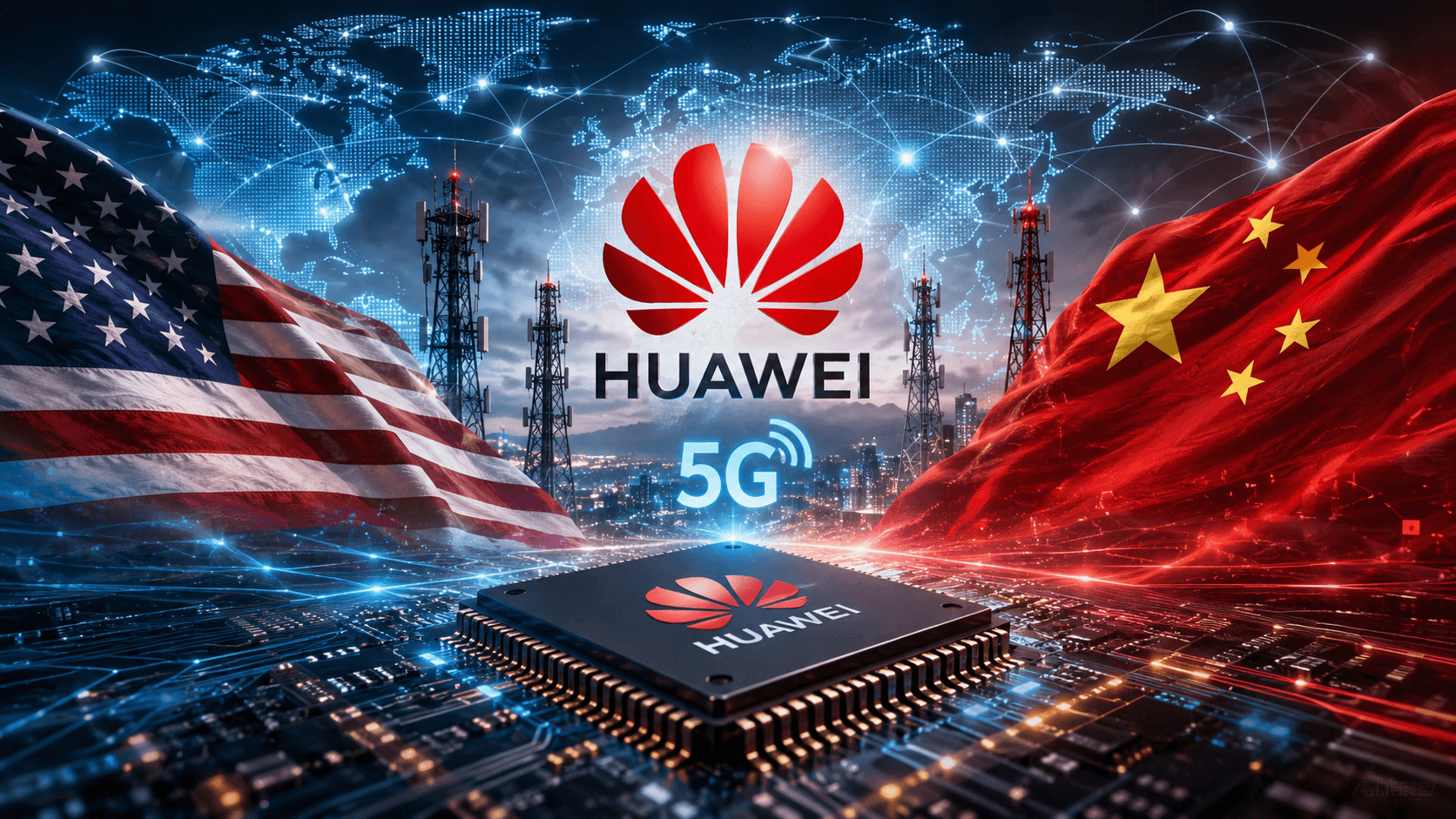
Why Is Huawei Restricted in Many Regions?
In December 2018, an executive of Huawei was apprehended on a connecting flight at Vancouver Airport. Soon enough, stock markets in three nations reacted to this incident as diplomats from China and the United States countered statements. A phone manufacturer that many consumers use to think affordably is now thrust into the biggest tech controversy of the century.
To understand how one arrest could greatly affect the world markets, you need to understand what Huawei really is.
The Infrastructure Nobody Sees
When you think of Huawei, consumer products may come to mind – smartphones, laptops, smartwatches and more. But the real strength of Huawei lies beneath the products users use. Huawei supplies the base stations that send the signals, as well as routers and switches that transmit internet traffic, and the core of the 5G system that will determine how entire nations will communicate for the next couple of decades.
By the end of the 2010s, Huawei had become one of the largest telecom manufacturers in the world when it comes to telecom equipment manufacturing, outrivaling such Scandinavian companies as Ericsson and Nokia.
In multiple countries from Africa to the Middle East and parts of Europe, the technology giant successfully sold not only its products but also built and, in some cases, even supported the communication systems of these countries.
Providing someone with a smartphone and building the communication backbone of the country’s telecommunication network involve very different kinds of relationships.
| Aspect | Summary |
|---|---|
| Consumer Products | Huawei is known for smartphones, laptops, smartwatches, and other devices. |
| Core Business | Its main strength is telecom infrastructure, including base stations, routers, switches, and 5G core networks. |
| Global Leadership | By the end of the 2010s, Huawei became the world’s leading telecom equipment manufacturer, surpassing Ericsson and Nokia. |
| Global Presence | Huawei built and maintained telecom networks across Africa, the Middle East, Europe, and many other regions. |
| Importance | Selling smartphones serves consumers, while building telecom infrastructure creates long-term strategic relationships with governments and telecom operators. |
Built on Research, Not Just Manufacturing
Huawei’s ascent wasn’t just due to inexpensive labor or government funding, although those factors were significant contributors. The company has consistently invested an extraordinarily high proportion of its earnings in research and development. It has frequently been reported that Huawei invests between 15-22% of its earnings into R&D, a percentage that is generally considered to be the highest by any tech company in the world.
As a result, Huawei was able to amass an enormous portfolio of patents related to 5G standards, telecommunications protocols, artificial intelligence, and chip design. By owning numerous so-called standard-essential patents, it has put itself in a very powerful position whenever international standardization bodies determine the technical specifications regarding 5G technology.
When such organizations make decisions on how 5G will function — how devices communicate with each other, how data is compressed and so on — companies with the largest number of patents will thus be able to collect royalties from other telecommunications companies that rely on their technology.
This is one of the reasons why the governments in the West became concerned about Huawei’s role in shaping the future of telecommunications.
Backdoors, Spying, and the Trust Problem
The essential accusation against Huawei, frequently reiterated by officials from the USA, UK, and Australia, has not been about the smartphones, apps, or even the cameras but rather the critical component of the telecom network and the anxiety that the various devices used in a country’s communication core could be manipulated to spy on people and, during a crisis, sabotage vital national communication systems.
Huawei has always denied the allegations of developing backdoors and transmitting the data to the Chinese government. The officials have been basing their claims about the risk of such practices occurring on the vulnerabilities of the Chinese system, such as the National Intelligence Law of China adopted in 2017, which obliges organizations to cooperate with state intelligence operations, and also the fact that Huawei is a Chinese company and can be forced to obey.
Meng Wanzhou and the Night the Dispute Became Personal
Meng Wanzhou, Huawei’s chief financial officer, who is also the daughter of Ren Zhengfei, the founder of Huawei, was arrested in Vancouver at the request of US authorities on 1st December 2018.
The accusation leveled against her is that a subsidiary of Huawei deceived banks concerning its dealings in Iran, thus putting the respective banks at risk of breaching US sanctions.
Essentially, for the common person, it would seem that this is a simple case of financial fraud, but the importance of this case is beyond a simple financial matter. After all, this is not just an ordinary manager from some division but the second person in charge in the company and a member of the company’s founding family.

China wasted no time in reacting to the serious issue. Just a couple of days after the arrest of the high-profile Chinese executive, two Canadian citizens, namely Michael Spavor and Michael Kovrig, were arrested on espionage charges, something that was perceived back in China as hostage diplomacy.
| Year | Event | Description |
|---|---|---|
| 2018 | The Arrest | Meng Wanzhou was detained in Vancouver on a U.S. extradition request. Soon after, China took Michael Kovrig and Michael Spavor into custody, accusing them of espionage. |
| 2019 | The Blacklist | The U.S. Commerce Department placed Huawei on its Entity List, preventing American firms from supplying Huawei without a government license. |
| 2020 | The Chokepoint | Washington expanded export controls to cover any chip made anywhere in the world using U.S. technology or software, severely affecting Huawei’s access to advanced TSMC-manufactured chips. |
| 2021 | Resolution and Release | Meng Wanzhou reached a deferred prosecution agreement with U.S. authorities and returned to China. On the same day, Michael Kovrig and Michael Spavor were released by China. |
| 2023–2026 | The Workaround Era | Huawei surprised the industry by shipping a 7nm-class Kirin chip through its domestic partner SMIC in 2023. In response, the U.S. and Taiwan further tightened export controls, while Huawei announced alternative chipmaking approaches aimed at reducing dependence on advanced lithography tools. |
Cutting the Supply Lines
The arrest of Huawei was not the most damaging blow. The real blow came with the calculated breakdown of Huawei’s supply chains. In 2019, Google revoked Huawei’s rights to preinstall Google Mobile Services on Android. This change rendered Huawei phones useless outside China, as they could not access Gmail, the Play Store, or Maps. In 2020, the US government restricted any semiconductors manufactured anywhere in the world using American-made software from being sold to Huawei without a special license.
This new regulation affected TSMC, Huawei’s key partner and the most advanced manufacturer that produced the Kirin processors that Huawei has been using. Given that, Huawei lost the ability to access chips for its top smartphones very quickly.
In addition, Huawei’s partners, such as Intel and Qualcomm, were not able to supply chips for Huawei laptops and modems in the following years. After two decades of establishing its presence in the hardware industry, Huawei got the loud and clear message from Washington: without American software and hardware solutions, Huawei could not grow any further.
| THE 2026 PICTURE — AN ONGOING ARMS RACE |
|---|
| Cutting the Supply Lines |
| Taiwan’s government has moved to directly restrict chip exports to Huawei and its domestic chip partner, SMIC, after Huawei was found to have used shell companies to obtain advanced AI chiplets from TSMC despite existing export bans. |
| In May 2026, Huawei’s semiconductor division unveiled a new manufacturing approach, called the “Tau Scaling Law,” designed to bypass the extreme ultraviolet (EUV) lithography machines it cannot legally access. The company says the technology could enable 1.4-nanometer-class chip performance by 2031. |
| Huawei has compared operating under these restrictions to flying an airplane full of bullet holes—a company that remains airborne but is visibly damaged and forced to build everything from spare parts. |
Why This Was Never About Phones
If we ignore the news regarding prohibited applications and banned chips, we can see that the real issues remain the same: this is a tug of war concerning who will be in charge of the technical and real infrastructure as far as global communication in the coming years is concerned. This industry is not just about purchasing; instead, it is about countries establishing relations for two or three decades with several maintenance, software, and technical rules that are rather hard and expensive to abandon at any point in time.
In the majority of developing countries, especially in African states as well as South Asian and Middle Eastern countries, Huawei’s solutions were one of the cheapest, the most technologically advanced, and often sold with the best credit offers from Chinese banks. That is the main reason why Huawei was not just a supplier, but a partner that could not be made equivalent to American suppliers in economic terms. Displacement of Huawei from the network that has already been created would not be quick or cheap.
Ren Zhengfei, the founder of Huawei, founded the company in 1987 after serving as an engineer in the PLA (People’s Liberation Army). Ren formed the company with a net value of 21,000 yuan (around US$5,000 at the time) for importing telecom devices. Over the years, he transformed the company into a highly complex organisation whose ownership and governance are difficult for outsiders to fully understand.
Thus, both the way the organization makes it inherently secretive and the fact that it benefits from the obscurity of being an unlisted private company make it suspicious and create considerable distrust in its products.
Huawei’s Unfinished Case
Although it has been almost ten years since Meng Wanzhou’s arrest, its influence over the current situation in Huawei’s dealings with the US has hardly disappeared but has adapted in a new form.
In the early phase, the drama of Google withdrawing its services from Huawei devices was at the forefront. These days, the situation has become more technical, as nanometers, lithography, and export licenses are on the agenda.
After several years of restrictions, Huawei has adopted an unconventional response, building a completely self-sufficient chain of production involving domestic chip technologies and manufacturing solutions, along with engineering techniques not dependent on the technologies banned for export.
The situation with Huawei is not settled yet. What started as an accusation of industrial spying has turned into an important lesson on the way technology, trade, and the power of the state flow together now — and how the chief battles of this century will not be fought with guns but with export permissions and fiber-optic cables.
This is a very thorough analysis of the situation. As far as the security reasons are concerned, even US companies in the US are obliged to cooperate with US government. So, if Huawei cooperates with the Chinese government in sharing information that makes sense.