
Understanding Zionism: History, Ideology, and Global Politics, Middle East Conflicts
Until a few years ago, or even one month ago, I would never have imagined speaking about religion in my writings. My journalistic background is one of being fiercely opposed to combining religion with political analysis, which is why, for the last several years, we have preferred to cover primarily historical, political, and social issues, using their social and political histories as our medium for analysis.
So, why am I addressing this issue after all these years?
Because today, both Israel and the United States have apparent religious ideologies governing their international political decisions.
While we have covered the Iran war from geopolitical, historical, and economic standpoints, we have never examined how religious ideology influences the current global political landscape.
The likes of Donald Trump, Benjamin Netanyahu, and other figures in power seem to have fostered a sense of faith in their ideological narratives.
Therefore, in order to fully understand Israel’s, America’s, and the West’s ambitions, we need to have a basic comprehension of Zionism’s ideology, Israel’s history, and its vision for the world (and especially the Middle East).
So, today, in this article I will explain about Zionism, its history, its roots and where might be it heading.
What Is Zionism?
The term Zionism is derived from the name of the hill Zion in Jerusalem.
Zionism can also be described as a philosophy and movement that promotes and supports the idea that all Jews throughout the world should eventually return to the holy land of Israel.
Zionists assert a religious and political relationship with the land; they claim that their relationship has been established by God as expressed in the Bible and other religious texts.
Many Zionists also believe that God made a promise to the descendants of Abraham by establishing a covenant with them that includes the land of the promise.
Some Zionists interpret Genesis’ land promise to extend from the river of Egypt to the Euphrates River.
In today’s world, the promised land could potentially include the following geographic regions:
Israel
Palestine
Lebanon
Jordan
Syria
Iraq
parts of Egypt
Because of this belief, Jews across the world historically maintained a deep emotional connection to Jerusalem, often praying for its prosperity.
The Ancient Jewish Kingdoms
As early as 2000 years ago (long before Jesus’ birth), there were Jewish kingdoms in the land of Israel.
However, eventually, they fell to foreign empires.
The first empire was Babylon, which sent many Jews into exile.
Then, in 70 AD, the Romans destroyed the Second Temple in Jerusalem.
Because of this destruction, many of the Jews were dispersed around the globe, which is referred to as the Jewish Diaspora.
From there, they migrated to:
- Europe
- North Africa
- parts of the Middle East
Despite being scattered, they maintained strong cultural and religious ties to their ancestral land.
Jewish Communities Through History
Throughout the Medieval Era, there was a shift in the direction of Jewish emigration from Western Europe to Eastern Europe, particularly to Poland and Russia.
During this time, Jews enjoyed a “Golden Age” in Spain while it was under Muslim rule. The Golden Age allowed for Jews to participate in and thrive as government administrators, traders, and scholars. Upon the completion of the Christian Reconquista, Jews were expelled from Spain in 1492, and most sought refuge within the Ottoman Empire as they migrated into many different regions.
Persecution in Europe
The Jewish people have endured many acts of persecution over thousands of years by numerous peoples.
Examples include:
- Babylonians
- Romans
- Christian Kings
- Russian Empire
Pogroms against Jews started in Russia in 1881, after the assassination of Alexander II.
Tens of thousands of Jews were attacked, forcibly removed from their home, and killed.
Many fled to the United States.
A small number fled to Palestine.
The Holocaust and the Jewish State
The escalation of antisemitism in Germany began around the turn of the 20th century.
The Nuremberg Laws, created by the Nazi regime led by Adolf Hitler, enforced antisemitic discrimination in Germany through law.
During World War II, Nazi Germany systematically murdered over 6 million Jews in one of the worst acts of genocide in history, the Holocaust.
The aftermath of this genocide resulted in increased global support for the establishment of a Jewish state.
The Rise of Modern Zionism
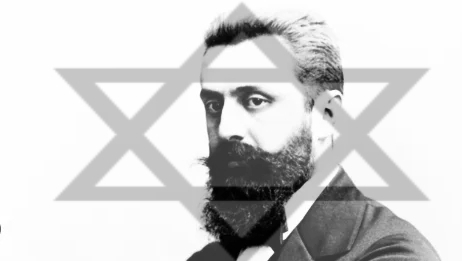
The primary architect of modern Zionism is Theodor Herzl (journalist and lawyer). In 1896, “The Jewish State” was published by Herzl, where he put forth the idea that a Jewish state was necessary in order to provide a place of safety and refuge for the Jewish people.
Herzl suggested two potential locations for this state: Argentina and Palestine. Ultimately, the Jewish leadership chose to pursue their efforts in creating a Jewish homeland in Palestine.
The Zionist movement gained momentum after Herzl held the First Zionist Congress in Basel, Switzerland, in 1897. At the First Zionist Congress, the World Zionist Organization was created to pursue the establishment of a homeland for Jewish people.
The Creation of Israel
The Balfour Declaration, which expressed British support for the establishment of a Jewish homeland in Palestine, was issued by British Foreign Secretary Arthur Balfour in 1917.
Following the conclusion of World War I, Palestine was put under the British Mandate.
Representatives of Jewish immigrants to the area saw a significant increase in population over the next few decades.
In 1947, the United Nations attempted to resolve the situation in Palestine by proposing the creation of two separate nations—one Jewish and one Arab.
On May 14, 1948, David Ben-Gurion announced that Israel was a nation-state.
This would lead to the beginning of the 1948 Arab-Israeli War, which was started when many Arab countries refused to accept the new nation.
Wars and Regional Conflicts
Israel has been involved in several wars since its founding:
- Suez Crisis (1956)
- Six-Day War (1967)
- Yom Kippur War (1973)
During those wars, Israel acquired land in the following locations:
- West Bank
- Gaza Strip
- Golan Heights
Israel has established itself as a significant military power in the Middle East.
Religious Narratives in Politics
Some religious-based political movements view this phenomenon in terms of prophecy.
Certain Christian Evangelical groups in America believe that the return of Jews to Israel precedes the return of Jesus Christ, and this belief is predominantly organized as Christian Zionism.
For these followers of Christ, supporting Israel is not only a political commitment but also a religious obligation to protect God’s chosen people.
Final Thought
According to the philosopher Voltaire, those who compel others to accept ridiculous beliefs can also get them to act violently. Likewise, Friedrich Nietzsche claims that sometimes conviction is a far worse opponent of any triumph than any other lie. For this reason, it is necessary to comprehend the role of ideology (whether it is religious or political) in analyzing modern-day global conflicts.