J.P. Morgan: The Banker Who Saved America and Created the Federal Reserve
He was never in any government post, nor did he contest an election, but he was the one who stood between the US and complete financial destruction twice.
History is full of moments when a single crisis reshaped entire societies. One famous example is theBlack Death, which transformed Europe’s economy and social order.
On the night of 3rd November 1907, at Madison Avenue, the doors closed of a private library, and a rich person pocketed the key. Around 100 of New York’s powerful bankers were inside. American economy was bleeding out outside.
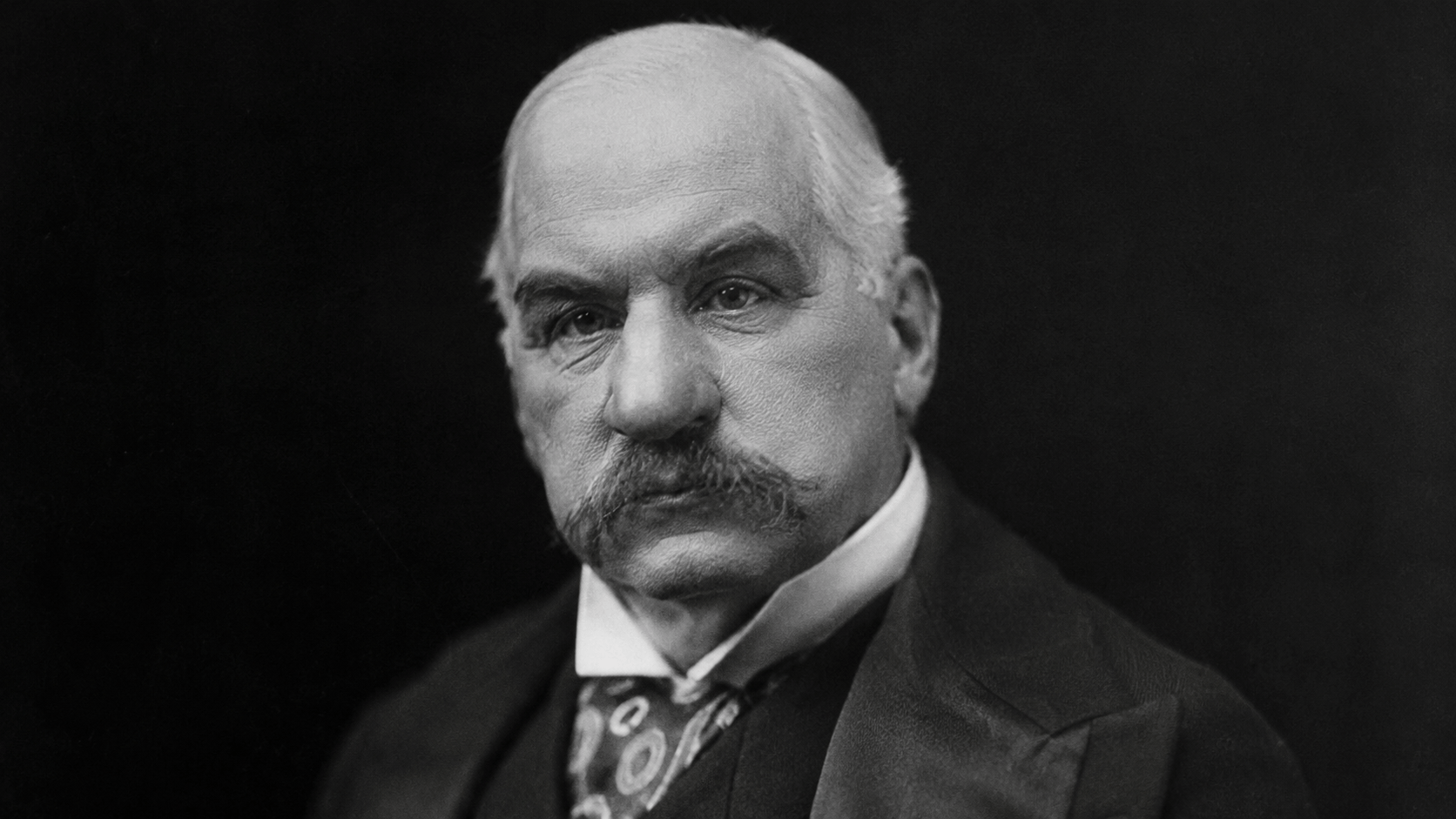
There was no Federal Reserve to call, no Treasury Facility to activate, no central authority that had the power to stop the run. There was only one person who could do it, and had the intention of letting nobody leave without agreeing to save this sanction. His name was John Pierpont Morgan, and on that night, maybe he was more powerful than the US President.
The scene looks fictional, but it was real. This night was America’s most consequential and strange night. And to understand the situation, we have to go 70 years back: how a private citizen became this much more powerful in a country that was, by any measure, a financial disaster about to happen.
The U.S. Banking System Before the Federal Reserve
Think of the US of the 1800s beginning, and forget about the American Financial Dominance of the present. Now compare both. No Federal Reserve, no FDIC, no National Currency. Instead of this, there were 1,000 banks in the country, at various points. Each bank was printing its own banknotes, and their value depended on which state you were in. Some banks clearly didn’t accept other banks’ notes. In the history of the American banking system, it was not a small calamity; it was structurally dangerous. Wherever the news circulated that the bank was in calamity, depositors ran to withdraw their money out of fear. But banks never kept the full amount of depositors’ money in the vault; most of the money was already lent.
A coordinated run could end any bank in hours, and did most of the time. In 1837, the same scenario turned into a national depression; 343 banks were closed permanently, 1000s of businesses destroyed, unemployment reached 25%, and the country took 7 years to get rid of it.
The same year, in 1837, a boy was born in Hartford, Connecticut, who was about to live his life by the advantage of chaos. His name was John Pierpont Morgan.
The American Civil War and the Economic Divide That Changed America
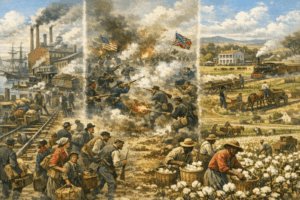
By the twenties of Morgan, the country’s structural instability was topped with a second layer: a nation divided on an economic fault line the same way it was divided on a moral fault line. Industrial North was running on wage labour, factories, and railways, and the South was running on the slavery system in every devastating way. Nearly four million people were enslaved, and its plantation economy supplied around 60% of raw cotton that was feeding the global textile trades, including British mills. When Abraham Lincoln’s administration passed a rule against slavery and started working on it, southern planters took it as an existential threat to their economy. Eleven states decided to secede, and therefore the Civil War started in America.
Imaginary portrait of the American Civil War
The human cost was astonishing; modern estimates were around 620, 000 to 750,000 deaths of soldiers. And according to some historians, the number might be near 850,000. While the total population of America was 13 million at the time.
Cities including Atlanta, Columbia, and Richmond were destroyed. Union won; the country was saved, but with loans and inflation, which disorganized and weakened the post-war economy, exactly the kind of environment where a specific type of financier grows vigorously.
How Junius Morgan Built the Foundation of J.P. Morgan’s Empire
There is a difference between people who inherit wealth and others who inherit systems, and we need to pay attention to it. The people who inherit systems, networks, access, and trust that outlive any collapse. Morgan was definitely from this type. And the credit goes to his father, Junius Spencer Morgan.
Junius was the partner of Peabody and later became the successor of his business after he decided to retire. He was an American financier who used to live in London and was doing, for decades, successfully almost no one else was doing: convincing European investors that American Railways and industries were worth the risk, regardless of the country’s instability. Peabody built his reputation on a simple but ruthless rule: he never let any bond default under his name. Even during the panic of 1837, to protect the trust of investors, he covered the loss personally.
When Peabody retired, the firm, then the company, became JS Morgan and Co., and with this, the Morgan family got something way more valuable than wealth: a permanent seat at the centre of transatlantic finance, and the wealth. investors trust. That Single inheritance – a pull between European Capital and American opportunity- is the key to understanding what Morgan built later.
J.P. Morgan’s Early Life: The Making of a Banking Giant
Morgan’s early life was not like others, but it was built like a deliberate apprenticeship. He was chronically ill in his youth. Seizures, rheumatic fever, and an extreme skin condition – acne rosacea, which disfigured his nose and made him embarrassed for the rest of his life. He later became known for buying and discarding his pictures of himself. A part of his childhood was spent bedridden.
His father Junius sent him to Switzerland to learn French and Swiss banking cultures and then to German University of Gottingen and in the end he was sent to London, there he learnt the differences which later became the base of his career: an America obsessed with quick, chaotic gain, verses a London built on patience, pecking order and long-term trust, working on an institution that US still didn’t have as real Central Bank, Bank of England, which was working from 1694.
Morgan’s outcome wasn’t that America doesn’t have money or talent, but the one thing that America was lacking was an order. And the shortage of order is the kind of gap a young financier can learn to fill, but for a price.
J.P. Morgan and the Railroad War That Built His Empire
Morgan’s first trial was the American Railroad Industry – a 19th-century critical digital infrastructure. Track mileage reached 85000 km in 1870 from 4800 km in 1840, along with this reckless overbuilding, and rival companies laying lines on the same routes. Burning money while no one had benefited.
In the summer of 1885, Morgan decided that he had enough of this war between the two biggest railroad companies, New York Central & Pennsylvania Railroad, destroying each other in the parallel line war.
The Corsair Compact: How J.P. Morgan Ended the Railroad War
He invited executives of both companies on his Yacht, Corsair, at the Hudson River for a pleasant meeting. It wasn’t very pleasant thought. According to many historians, Morgan made it clear that the yacht wouldn’t go back to the port till both ends made a deal. Lunch was served, cigars were lit, and when the Yacht sailed back to port, the deal was struck. The Central will accept the rival line, and the new costly competing railroad project would be abandoned.
Historians call it the Corsair compact, and afterwards the template became “Morganization” in the business world.
The word became so common that business dictionaries included it.
On paper, it looked like “Rescue”, but in reality, this literally meant ending to keep the competition in the market and keeping the pressure low. By 1902, Morgan was holding almost 250,000 km of American Railroad, one-third of the network, in the hands of a private banking house.
CASE FILE:
Year
Event
Historical Significance
1885
Corsair Compact ends the New York Central–Pennsylvania Railroad rate war.
Marks the beginning of “Morganization,” where Morgan stabilized industries by ending destructive competition.
1892
Morgan engineers the merger that creates General Electric (GE).
Forms one of the world’s largest electrical companies, cementing Morgan’s influence over American industry.
1901
Buys Carnegie Steel and forms U.S. Steel, the world’s first billion-dollar corporation.
Creates the first company valued at over $1 billion, dominating the American steel industry.
1902
Controls nearly one-third of America’s railroad network.
Establishes Morgan as the most powerful financier in the U.S. railroad industry.
1907
Personally organizes the private bailout that ends the Panic of 1907.
Prevents the collapse of the U.S. banking system and paves the way for the creation of the Federal Reserve.
How J.P. Morgan Bought Carnegie Steel and Created U.S. Steel
By the end of 18905, Morgan had an issue with a name: Andrew Carnegie. Where Morgan built his empire with financial control, Carnegie built his empire with industrial efficiency, owning every stage of production of steel, iron mines, coal fields, railways, and mills; it was a strategy known as vertical integration, and he could drive out his rivals. And in the 1900s, Carnegie was threatening to set off a price war that could unfortify Morgan’s railroad and syndicates, built with his capital.
The solution came at a dinner at the University Club of New York on 12 December 1900, where Young, president of Carnegie Steel, Charles Schwab gave a speech, in which he proposed an idea of a giant steel centre that holds the global market. Morgan was impressed by his idea; he pulled Schwab with him and offered to buy Carnegie Steel.
The next day, Carnegie gave Schwab a small paper slip on which only a number was written, which was $480 million. He was already in his mid-sixties and planning to retire. He didn’t give any explanations and negotiation. Morgan accepted the offer immediately, and then congratulated Mr. Carnegie on being the richest person in the world.
In 1907, after this deal, the Carnegie company and nine other steel producers related to it created the US Steel. The world’s first billion-dollar corporation, worth almost $1.4 billion, which held 60% of American Steel production.
The Panic of 1907: The Banking Crisis That Changed America
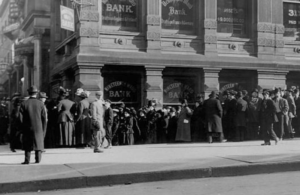
In 1907, the trigger was surprisingly small: a failed attempt by two speculators to corner the market of United Fine Copper Company stock, and it affected the banks related to the conspirators. Knickerboard Trust Company, New York’s third biggest trust, witnessed the withdrawal of $8 million in a single day, which is worth around $280 million today. Panic was not limited; it spread to the whole banking system of the city in days, and the stock market nearly fell to half of the value of its highs.
Panic of 1907
Financial crises are not limited to banks. In the modern era, technology has also become a source of geopolitical competition, as seen in our analysis of Huawei.
How J.P. Morgan’s Rescue Led to the Creation of the Federal Reserve
Morgan was 70 at that time and was in the Church of Virginia for the conference when he got the news. He immediately went back to New York and became a one-man central bank. He, along with financiers like James Stillman, George F. Baker, and the US Treasury Secretary, decided which institutions would survive and which would die.
After spending days, he let the Knickerboard Trust go, judging it was not worth saving, and sent funds to shore up the system. On the night of November 3, the crisis reached it dramatical end. J.P. Morgan invited dozens of top bankers to his private library on Madison Avenue, showed them numbers, and asked them to raise almost $25 million to backstop weak trust companies.
All were reluctant, but Morgan is reported to have locked the library and kept the key in his pocket until the bank officials had arranged the money and signed the contract. The contract was signed at 4:45 am.
Imagine, for a moment, that a private citizen deciding bank in the country survives a financial collapse, without any vote, office, and no public mandate. That is exactly what happened that night.
Panic stopped; it worked, but one thing appeared that Washington couldn’t ignore: the whole US economy depended on an old banker, who could say no to help next time.
This discomfort drove Congress towards the Aldrich-Vreeland Act of 1908 and then to the Federal Reserve Act of 1913, America’s first true Central Bank.
Why J.P. Morgan Was Called a Robber Baron
Morgan’s story does not revolve around hero or villain. He always managed the chronically unstable financial System. And the steps he took for the panics of 1893 and 1907, the results for bankers and businesses would have worsened. At the same time, his method crushed the competition, controlled all the prices, and left him, along with coevals like Carnegie and Rockefeller, branded as “Robber Baron,” a term that was reserved for Gilded Age tycoons, who earned their wealth from unethical and legally contested methods.
The Northern Securities Case: Theodore Roosevelt vs. J.P. Morgan
Government eventually pushed back in 1902. Precedent: Theodore Roosevelt ordered an antitrust case against Northern Securities, a Railroad holding company, which Morgan built with James J. Hill and EH Harriman to control competing transcontinental lines. In 1904, the Supreme Court’s verdict came against Morgan. According to Sherman Anti trust Act, ordering to dissolve the company. First big win of Roosevelt, and a signal that unchecked private financial powers are about to end.
Who Was Morgan?
Morgan died in March 1913, in Rome, just months before the Federal Reserve Act was signed into law. His net worth was roughly around $68-million to $118 million, including a massive art collection- a big amount for the time, but less than his contemporaries like John D. Rockefeller, whose net worth was in the billions. Rockefeller said after hearing his net worth that “Morgan wasn’t even a rich man”. Morgan’s real currency was never simple cash. It was control, access, and dependency, which is the most expensive product in finance.
Closing Note
JP Morgan Workspace
The thing that makes Morgen worth studying is not his empire including railroad, us steel, and the House of Morgan that eventually become JP Morgan Chase but is the uncomfortable question his career keeps forcing back into view: what happens when financial stability depends on someone, even briefly on the judgement of an unelected man, years later, with Central Banks working firmly, its worth remembering that exist because of a locked door at a library in Madison.
Hammad Akbar is a political science student at the University of Balochistan and the founder of Brainification Blogs — a platform dedicated to the rigorous and accessible exploration of philosophy, world politics, and the shifting contours of global power.His writing draws from a commitment to intellectual honesty: situating ideas within their proper historical and theoretical contexts, interrogating assumptions that often go unexamined, and arriving at conclusions through reason rather than reflex. Whether engaging with the philosophy of the state, the dynamics of geopolitical rivalry, or the moral questions embedded in international affairs, Hammad approaches each subject as an invitation for genuine inquiry."Not just what to think about the world — but how, and why."
A contributor to academic journals and newspapers, he understands that credibility is earned not through assertion but through the quality of one's reasoning. His readers find in his work a rare combination: analytically precise arguments without being inaccessible, and perspectives that are firmly held without being closed.Hammad believes that in an era of noise and rapid-fire opinion, the most radical act is to slow down, think carefully, and write with clarity and care.