
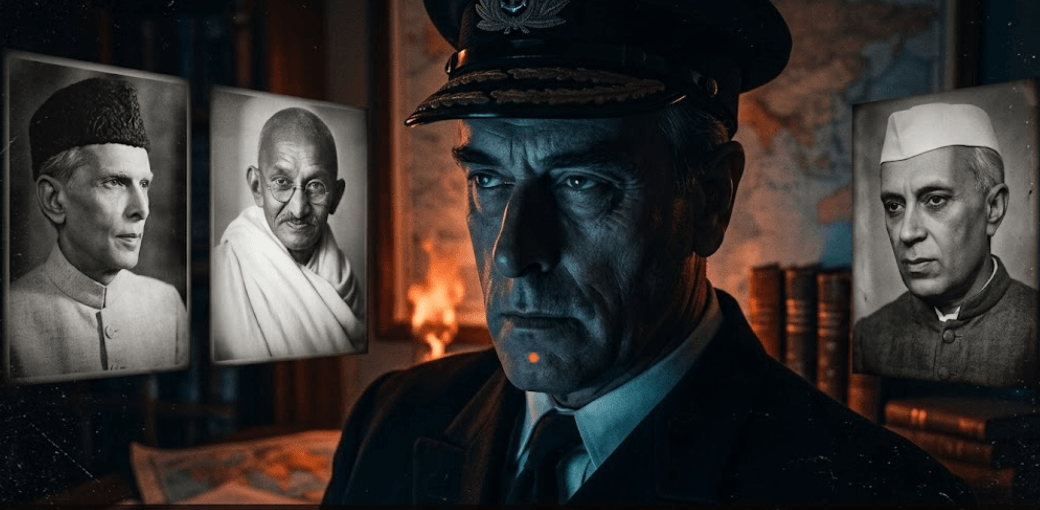
Partition of India 1947: How Partition Turned Pakistan’s Independence Into a Humanitarian Disaster
The partition of two nations
On 14 August 1947, Pakistan gained its independence, but the price of freedom was paid with rivers of blood. People left their hometowns, people discovered that the homes they lived in, the offices, shops they worked in, the loved ones they buried in, now belongs to a foreign country.
The morning of 14 August was more than horrible for the emigrants because the trains arrived with millions of dead bodies. And the one who was alive arrived empty-handed. They had nothing in hand to start their lives, no army was positioned for protection, no food, no shelters, no medicines. People even died after arriving in Pakistan due to diseases like Cholera, dysentery, malaria, plague, smallpox, typhoid, and typhus, which were all widespread, adding to the sufferings of Muslim emigrants. The deaths continued for months even after coming to Pakistan.
The borders drawn between Pakistan and India
The borders between Pakistan and India were drawn by Sir Cyril Redcliffe. He was a British Barrister who had never in his life visited the subcontinent in his entire life before being appointed to the task. He was chosen in the hope that he had no connections to India, and he would be neutral.
He chaired the two boundary commissions, one for Punjab and another for Bengal, responsible for drawing the borders. The commission created the borders between India and Pakistan, which included West Pakistan in the northwest and East Pakistan, today’s Bangladesh, in the east, thus it officially authorized the division of the subcontinent. He never visited the lands he was going to distribute between two countries, he never spoke to the people who were going to be affected, he drew lines on outdated census records, administrative maps inherited by colonial rules, and submissions from politically motivated parties with clear vested interests. The poet W. H. Auden described Radcliffe’s dilemma plainly: he was tasked with splitting a country between two communities whose religions and ways of life made them deeply incompatible with one another, relying on maps that were already out of date and census records that were far from reliable.
In an interview with Kuldeep Nayar, Redcliff said: “I almost gave Lahore to India,” Lord Cyril Radcliffe told Nayar. “But then I realised that Pakistan would not have any major city but India already has Calcutta.” Lahore had Hindus and Sikhs in a majority and was way up in assets, he said, yet he had no option because of the paucity of big towns in Pakistan”. Radcliffe also told Nayar that: “They should be thankful to me because I went out of the way to give them Lahore, which deserved to go to India. Even otherwise, I privileged Muslims over Hindus.”
Partition, Inevitable or Not
Jinnah himself never wanted partition in the beginning; he was in favour of equal Hindu and Muslim power and authority rights, and he was a constitutionalist. Even within the Muslim League, the vision of Pakistan was equivocal until the very late. Jinnah’s demand for Pakistan was in a negotiating position.
Narendra Serila states in his book “Shadow of the Great Game”, which is declassified in the British archives, that 70 to 75% of Muslim majority states like NWFP, Sindh, West Punjab, the demand for Pakistan, was far from universal. According to him, the narrative of Islam in danger had very little emotional significance in these states. The demand of separate country raised from states like UP, Bihar, Bombay, where Muslims were in the minority.
Flop Cabinet Mission Plan
The Cabinet mission was presented after the 1945 war, when Britian was under extreme financial crisis, and in India, the calls for independence were increasing, when the Muslim League was demanding for separate Muslim country, and Congress wanted a strong centralized government.
The Cabinet Mission plan was proposed by the British as the last federal solution that could have stopped partition. But both the Muslim League and Congress walked away after accepting it first. The Muslim League walked away because Nehru’s interpretation seemed to erode the provincial groupings, and Congress denied the cabinet mission plan because they feared it would end up creating a de facto Pakistan within the united India.
The plan failed, and the last chance to avoid partition also collapsed.
Lord Mountbatten’s Dangerous Rush:
On 28 February 1947, the British Prime Minister, Clement Attlee, announced that the British government would withdraw in June 1948. Lord Mountbatten came to the subcontinent on March 22,1947 as the last British Viceroy armed with plenipotentiary authorities. After arriving, Mountbatten noticed that the condition of the subcontinent was extremely beyond control, so he gave his plan on June 3,1947, that independence would be given on 15 of August 1947. So Britain had 72 days to pack their bags and move out from India and grant independence. His hastening was the main reason behind this tragic destruction .
Cambridge historian Professor Joya Chatterji described it bluntly: “It’s like having a cack-handed, sloppy, hard, extreme Brexit done in a month. No careful, negotiated transition that tried to figure out what was in the best interests of the people who had to live through this.”
What were the reasons behind Mountbatten’s rush? Mountbatten held deeply personal motivations, like his naval career, his family prestige, and his wish to return home.
His acceleration became the primary reason behind the deaths of millions, people becoming homeless, and the Kashmir dispute till now.
The Hidden British Strategic Agenda
The British never wanted to leave the subcontinent simply; their agenda was to leave on their own terms. They never wanted the subcontinent to get united and challenge Western powers; they wanted to create Pakistan as a strong shield against the Soviets. The Kashmir dispute was left deliberately unresolved, ensuring that both nations would remain dependent on British mediation — while allowing Britain to exit before accountability for the ensuing chaos could be pinned on it.
Narendra Sarila wrote: “The British strategic objective was not simply to exit India — it was to exit while retaining control over the northwest. Partition was the mechanism. Jinnah was the instrument. And the Congress Party never saw it coming”.
The Greatest Human Migration
In the summer of 1947, the partition of British India triggered what the Guinness Book of World Records officially recognizes as the largest mass migration in human history. People went on foot, by bicycle, and in carts to their countries. Between 14 and 15 million people set themselves in motion, Hindus and Sikhs moving toward India, Muslims moving toward Pakistan. They grabbed whatever they could grab in those final desperate moments. Everything else was left behind the houses they were born in, the shops their fathers had built, the shrines they had prayed at all their lives, the graves of ancestors, and entire worlds that had taken generations to create and could never be rebuilt.
Bengal was divided into two: East Bengal for Muslims, and the west became part of India. East Bengal later became Bangladesh. The refugee camps established during the time of partition, which kept running for decades, remind us of the catastrophic conditions of crisis. The scars left by Bengal’s partition ran so far beneath the surface that they would ultimately erupt into an entirely new conflict, the war of 1971.
The Trains That Only Carried Dead
According to the EYEWITNESS ACCOUNT, PUNJAB, 1947 (DOCUMENTED IN HISTORICAL RECORDS)
“One eyewitness, speaking to Time magazine, described stumbling upon a scene of mass casualties — victims of both bladed weapons and bullets. He said the entire landscape was silent except for the cries of babies crawling around the corpses of their dismembered mothers, and the moans of an elderly woman who still lived but had her arms and legs cut off.”
At times, mobs targeted and killed passengers traveling in both directions across the new border. The trains carrying their corpses became known as “ghost trains.” These trains full of refugees’ corpses plied the railway tracks in silence, one of the most chilling images of the entire partition catastrophe.
Another survivor recalled gazing helplessly from a train window as it tore through village after village — scenes of women fleeing into wells, pursued by men intent on killing, too overwhelming to fully comprehend. Dead, dismembered bodies lying by the railway tracks. Fires are raging everywhere. Houses, fields, animals, and carts, everything up in flames.
The trains of 1947 did not carry passengers only; they carried a message: that the line drawn on a map had not just divided a country, but had divided humanity itself.
Renowned South Asian historian William Dalrymple did not mince words in describing Partition — calling it, plainly, a mutual genocide.
The violence was not solely spontaneous. Organized armed groups like Sikh jathas, RSS units on one side, tribal lashkars from the northwest on the other, mobbed the refugee camps. Communities that had lived alongside each other for centuries turned on their neighbours with a ferocity that shocked even those who witnessed it.
Estimates of total deaths vary from 200,000 to 2 million from both sides. The most commonly cited figure, according to historians, is approximately one million people killed in the months surrounding partition.
Women who were Abandoned
The violence against women from each country during the period of partition was intentionally kept hidden for years. The stories remained hidden by their families, even it only came out due to the efforts of feminists and oral historians who exposed the brutality to the women.
The historian Yasmin Khan wrote in The Great Partition:
Rather than being abandoned after being attacked, tens of thousands of women were kept in the “other” country as permanent hostages, forced wives, or unpaid labourers. No other identity was afforded to them — they were referred to simply as the abducted women.
The violence against women was done to dishonor the other rival group, and the abduction and rape of women from other communities were used as weapons against the antagonist. Women from each religion became the target of brutality during the partition.
During the Rawalpindi massacre, many women killed themselves to get rid of abduction and rapes. Massive numbers of women are choosing death rather than being captured.
After 8 years of partition, 20,000 Muslim women were sent back to Pakistan, and around 9000 Hindus and Sikh women were sent to India. The rest of them never went to their families and countries.
KASHMIR: The Wound That Never Healed:
Kashmir became the direct reason behind the Indo-Pak wars in 1947, 1965, and 1971. Redcliff, the person who drew borders, wasn’t even aware of the situation that was created when he left. When British rule ended, Kashmir was given a choice whether to choose being a part of India or Pakistan. It was a region with a Muslim community ruled by a Hindu leader, Maharaja Hari Singh, who decided to become an independent state, but Pakistani tribals invaded in October 1947. Hari Singh ended up signing the Instrument of Accession, which caused the first war between India and Pakistan. It’s the wound that still bleeds, multiple conflicts, and an insurgency that has claimed multiple thousands of lives since 1989.
Conclusions
The partition of the subcontinent led to two nations; the reasons behind it were ideology, political injustices, religious tensions, fear of submission, and failed attempts to keep the country united. While it provided multiple people with their separate homelands, it took millions of people’s lives, and thousands of people ended up homeless and jobless.
The scar of partition still can not be healed between India and Pakistan. Even after 7 decades, this partition remains the biggest event in the history of Asia.
Great content! Keep up the good work!