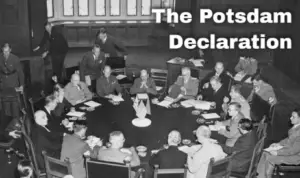
As World War II approached its end, the leaders of the United States, the United Kingdom, and the Soviet Union—Harry Truman, Winston Churchill, and Joseph Stalin—gathered in Potsdam, Germany, for the historic Potsdam Conference. The main goal of this meeting was to decide the future of a defeated Germany and shape the political order of post–World War II Europe.
Alongside Germany, the Allied leaders also focused on Japan, which was still fighting fiercely in the Pacific War. Key discussions were held on how to bring the conflict with Japan to an end and ensure long-term global stability. This conference played a crucial role in shaping the final phase of World War II and the world that followed.
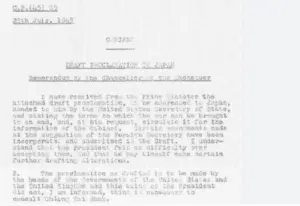
The result of this meeting was a final message to Japan (the Potsdam Declaration) that demanded Japan’s unconditional surrender and indicated that, if they refused, they would be subject to “prompt and utter destruction”.
Although the message was quite serious, it did not use any language addressing the Emperor of Japan, which the Japanese found had a significant impact on their understanding.
Potsdam Conference 26 July, 1945
Atomic Secrets and Stalin’s Silence
During the ongoing Potsdam Conference, the United States had already tested its first atomic bomb at the Trinity Test. President Harry Truman informed Soviet leader Joseph Stalin about the development of a powerful new bomb, expecting a strong reaction. However, Truman was surprised by Stalin’s calm response. It later became clear that Stalin already knew about the weapon, as Soviet intelligence had successfully infiltrated the Manhattan Project and shared the information with Moscow.
This incident highlighted the growing suspicion between the two countries, as they had moved from formal allies to adversaries in what would become the Cold War.
Why Surrender Was Unthinkable for Japan
For Japan, surrender was not merely a military choice—it was a profound cultural taboo, deeply rooted in notions of honor, duty, and national pride.
The Bushido code affected Japanese society’s view of surrender as a huge disgrace and worse than dying. Soldiers were taught to fight for their country until the very last minute, while civilians were taught to never surrender, or they would become slaves and have their culture and everything they loved destroyed.
Because of this, their mindset about unconditional surrender made it very difficult to think about accepting it. The Japanese leaders always believed that by continuing to fight a lost cause, they would preserve their nation’s honor and negotiate a better peace settlement.
Okinawa and the Fear of Invasion
In 1945, the Battle of Okinawa became a turning point, showing what a full-scale homeland battle in Japan’s own backyard would look like. The fighting lasted over 80 days and resulted in horrific casualties, including tens of thousands of civilian deaths—many caused by mass suicides—highlighting the immense human cost of the war.
Both sides realized that any invasion of Japan’s main islands would be an unstoppable force – this persuaded the Japanese to ramp up military mobilization (men, women, and teenagers).
Nearly a quarter of Japan’s population was mobilized to fight on the front lines against the United States, demonstrating that any victory over Japan would come at an extremely high cost would be at a much greater cost than they anticipated.
Hiroshima, Nagasaki, and the Collapse of Resistance
Japan responded to the Potsdam Declaration with the word mokusatsu, which could mean “no comment” or “to ignore.” The Allies interpreted this as defiance. The United States dropped an atomic bomb on the Japanese city of Hiroshima on August 6, 1945, marking a decisive and devastating moment in World War II.
The bomb killed tens of thousands of civilians within seconds of being dropped.
The leadership of Japan initially denied that the weapon was atomic, but scientific evidence showed the presence of radiation, which indicated that Japan had been attacked with a new weapon. Japan continued to refuse to surrender.
The Soviet Union invaded Manchuria on August 8, then two days later, the U.S. dropped a second atomic bomb, destroying Nagasaki. Facing nuclear devastation, Soviet invasion, and internal collapse, Japan’s leadership reached a deadlock.
Copy of Potsdam Declaration
The Emperor’s Decision and the End of World War II
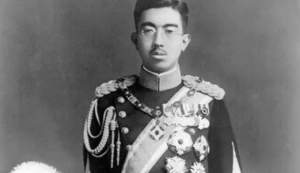
Japan’s final decision to end the war came from Emperor Hirohito himself, after deep divisions emerged within the government. Carefully weighing both sides of the debate, the Emperor chose peace—an extraordinary and historic move that broke more than 2,000 years of tradition in which emperors avoided direct political decisions.
On 15 August 1945, the Japanese people heard the Emperor’s voice for the first time in a nationwide radio broadcast. Although he never directly used the word “surrender,” he described the atomic bomb as “a cruel instrument of war” and urged the nation to “endure the unendurable” for the sake of peace.
This emotional address marked a turning point in Japanese history, symbolizing both national sorrow and the beginning of a new era.
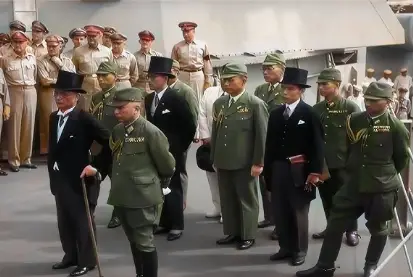
Japan’s formal surrender followed on 2 September 1945 aboard the USS Missouri, officially bringing World War II to an end.
Hammad Akbar is a political science student at the University of Balochistan and the founder of Brainification Blogs — a platform dedicated to the rigorous and accessible exploration of philosophy, world politics, and the shifting contours of global power.His writing draws from a commitment to intellectual honesty: situating ideas within their proper historical and theoretical contexts, interrogating assumptions that often go unexamined, and arriving at conclusions through reason rather than reflex. Whether engaging with the philosophy of the state, the dynamics of geopolitical rivalry, or the moral questions embedded in international affairs, Hammad approaches each subject as an invitation for genuine inquiry."Not just what to think about the world — but how, and why."
A contributor to academic journals and newspapers, he understands that credibility is earned not through assertion but through the quality of one's reasoning. His readers find in his work a rare combination: analytically precise arguments without being inaccessible, and perspectives that are firmly held without being closed.Hammad believes that in an era of noise and rapid-fire opinion, the most radical act is to slow down, think carefully, and write with clarity and care.