Sigmund Freud’s Theory of Dreams Explained Simply
What do these dreams mean? Why do we see these kinds of dreams? Do they have meaning behind them, or are they just random? Have you ever woken up from a sleep and thought, “What was that”? Have you ever dreamed about standing naked publicly, or falling from a height, or flying? These questions are central to the Theory of Dreams.
Freud and The Interpretation of Dreams
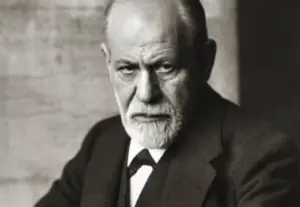
The research given is from the book ‘The Interpretation of Dreams’ by Sigmund Freud. According to Sigmund Freud, the father of psychoanalysis, “Dreams are a form of wish fulfillment”. He says these dreams are not divine intervention like old people used to believe.
He explained dreams by putting spirituality aside. He says that these dreams have some sort of connection with unconscious life, emotions, desires, or fears. This explanation forms the foundation of Freud’s Theory of dreams.
How Ancient People Explained Dreams
In ancient times, when people had dreams, they took them as a sign or message from God. They used to explain their dreams in two ways. One way to explain the dream was to keep the real meaning of the dream to predict the future, like one person dreamed of getting a job, and the analyst tells him that he will get a job in the future. The second way was breaking the dreams into parts to get the meaning of a dream. Freud rejected these ideas while developing his Theory of dreams.
Alexander the Great’s Dream Example
For example, once Alexander the Great had a dream in which a satyr (a God from Greek mythology) was dancing on his shield. A dream analyst explained it by breaking the word into two, “sa-tyr,” meaning Tyre (now a city in Lebanon), “will be yours,” which Alexander later conquered. Freud explained it as a coincidence, which aligns with his scientific Theory of dreams.

Freud’s Scientific Explanation of Dreams
Freud claimed that there is a scientific way to explain dreams, which is to connect the dreams of a person with their personal experiences, emotions, and old memories. This scientific approach is a key element of the Theory of dreams.
Freud’s Personal Dream Example
Freud explained it with an example from his personal life. Once, he had a dream in which he was sitting in a hospital with his friend Otto, along with family doctor Irma and another doctor named Doctor M. Doctor M said that Irma was very ill and that it was because Otto gave her an injection with a dirty syringe, and the dream ended.
When Freud woke up and thought about it, he concluded that it was related to a situation where he received a phone call before he slept, in which Otto told Freud that Irma was seriously ill because Freud had given her an injection with a dirty syringe. Freud explained this situation as his mind giving justification that he was not guilty of whatever happened, but Otto was; his mind tried to blame Otto for it in his dream. So Freud concluded that the dream showed wish fulfillment, supporting his Theory of dreams.
Are All Dreams Wish Fulfillment?
Here, a question arises: is every dream the same, a wish fulfillment? Freud tells us that some dreams are dreams of convenience.
Dreams of Convenience
For example, once Freud’s colleague had to come early to the hospital, but instead he was dreaming of being early in the hospital while lying on a bed. His mind was deceiving him by telling him in his dream that he was already in the hospital, so these kinds of dreams are called dreams of convenience. Such dreams also fit within Freud’s broader Theory of dreams.
Dreams as “The Censored Newspaper”
Freud writes that “Dreams are the censored newspaper”. Our brain has a censor system that stops our dreams from expressing desires directly.
Symbolic Expression of Hidden Desires
He gave another example of his patient, who had a dream where her nephew Charles was dead and lying in an open casket. When Freud interrogated her, she told him that she had a crush on a professor who was also her family friend, but he didn’t visit her home very often due to family clashes; he last visited her home at the funeral of Charles’s elder brother. So her mind was indirectly telling her that if Charles died, the professor might visit her again.
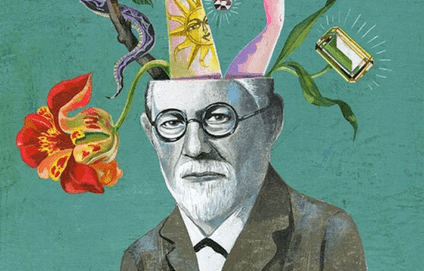
Our brain expresses our desires in symbols. The emotions hidden in our subconscious mind do not come directly in our dreams but appear in symbols that we need to decode.
Where Does the Brain Get Dream Material?
Another question comes to our mind: where does our brain get the material for dreams?
There are a couple of answers to it. First, if you have experienced something recently, it will appear in your dream directly. The second answer is that when your dream becomes more complicated by mixing the experience with an old memory to make another story in your dream.
Recent Experiences and Old Memories
Freud gave us an example. Suppose you met a person named Mr. Gartner in recent times; his name is similar to “gardener,” so a garden or flower may appear in your dream. That garden or flower will indicate that you liked Mr. Gartner.
Childhood Memories as a Source of Dreams
Childhood memories are prominent sources of dreams. Freud gave a personal life example. When he was young, his father said to him, “You can’t succeed in your life.” So when he became successful in his life, he had a dream the night before he was going to receive an award, where he saw himself wearing a tie improperly. This indicated his childhood traumas and insecurities.
Physical Stimulation and Dreams
Another source is physical stimulation, the third source of dreams. When our body reacts to dreams, for example, when you shake someone to wake them, everything happening in their dreams will also shake.
How Dreams Are Formed
Have you ever thought about who is writing the story of our dreams or how they are formed? According to Freud, our brain compresses the data of our life, and then our mind displaces our memories with other things.
Condensation and Displacement in Dreams
Our brain uses these two tools, condensation and displacement, to make a story in our dreams.
For example, if you have to complete an assignment or project but time is running out, you might dream of missing a train or seeing a melting clock.
Dream Symbols Explained
Dreams symbolize different objects, like a king or queen, who are symbolized as mother or father, or left or right, symbolized by moral opposites like right or wrong. If long objects like sticks or weapons are symbolized by male genitals, while small boxes, vessels, and containers are symbolized by female genitals.
Conclusion: Dreams and the Unconscious Mind
Freud believed dreams are not just random messages or images but a reflection of our subconscious mind. He said dreams are the “royal road to the unconscious”, which perfectly summarizes Freud’s Theory of dreams.