
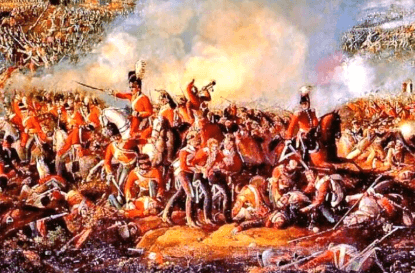
Battle of Buxar (1764): The Battle That Changed India Forever
The Battle of Buxar in 1764, fought between the British East India Company and the combined army of Indian rulers ( Mughals, Nawab of Awada, and former Nawab of Bengal Mir Qasim), lasted only a short time, but its impact reshaped the history of the subcontinent for centuries. After this important battle of Indian history, the British East India Company gained real political and military power for the first time. This battle became the main cause of the Mughal Empire’s decline.
In this article, we will understand:
- Why the Battle of Buxar happened
- What happened during the battle
- Why historians say that without Buxar, modern India would be very different
Background: India Before the Battle of Buxar
Before understanding the battle of Buxar, first we must understand 1761, the year of the Third Battle of Panipat. In the third battle of Panipat, the Marathas were defeated by Ahmed Shah Durrani with the help of Shuja-ud-Daula, who was the Nawab of Awadh.
After this victory, the confidence of Shuja-ud-Daula became high as he secured absolute power. He believed no rival in North India could threaten his dominance.
Before this, in 1757, another important battle had already changed the fate of Bengal — the Battle of Plassey.
Battle of Plassey (1757): The Beginning of British Power
The Battle of Plassey was fought between:
Led by Robert Clive, the British East India Company faced Siraj-ud-Daula, the Nawab of Bengal
Mir Jafar was the commander of Siraj-ud-Daula’s troops when he conspired with the British to turn on his leader and fight for them in exchange for being made the new Nawab of Bengal. This treachery made it easy for the British to win the battle. When Mir Jafar became Nawab, he couldn’t stop the Company from taking control of Bengal’s wealth and property. The victory at Plassey was the first of many changes made to the Indian subcontinent.
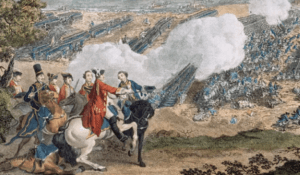
Mir Qasim vs East India Company
From 1757 until 1760, Mir Jafar was the ruler of Bengal. He was continuously pressured by the Company.
As he could not meet the increasing demands of the Company, his son-in-law Mir Qasim was appointed the Nawab in 1760. Mir Qasim was cleverer than Jafar and was less reliant on the Company; he:
As he could not meet the increasing demands of the Company, his son-in-law Mir Qasim was appointed the Nawab in 1760. Mir Qasim was cleverer than Jafar and was less reliant on the Company; he:
- Reorganized the army
- Reduced Company privileges
- Resisted British interference
This led to the outbreak of war between the Company and Mir Qasim in 1763. Mir Qasim lost this battle and went to Awadh, where he met Shuja-ud-Daula.
Formation of the Anti-British Alliance
Three powerful figures now came together:
- The Nawab of Awadh, Shuja-ud-Daula
- Mughal Emperor Shah Alam II
- Former Nawab of Bengal Mir Qasim
Their goal was simple:
Defeating the British and removing them from Bengal
Defeating the British and removing them from Bengal
Shah Alam II had already warned Shuja-Ud-Daula that the British army was totally different from other local armies. They were more disciplined, well-trained, and had modern weapons. But Shuja-Ud-Daula was confident after the victory of Panipat, and he thought he could easily defeat the British.
What Happened in The Battle of Buxar (1764)
The two armies met near Buxar (now in Bihar), on the banks of the Ganga River.
Army Strength
Indian coalition: 35,000–45,000 soldiers
- Infantry
- Cavalry
- Afghan horsemen
- Mounted cannons (zamburaks)
British EIC : 10,000–20,000 soldiers
- Mostly Indian sepoys
- About 1,000 European soldiers
- Better guns and leadership
Despite being outnumbered, the British had a major advantage:
discipline, training, and command structure.
discipline, training, and command structure.
Why the British Won the Battle of Buxar
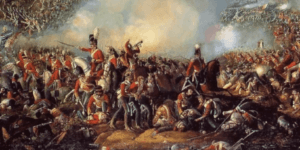
1. Better Military Organization
British soldiers fought in tight formations. If one officer died, another immediately took command. The Indian side lacked this system, which caused chaos when leaders fell.
2. Square Formation
When Afghan cavalry attacked, British infantry formed square formations, firing in turns (volley firing). Cavalry could not break this formation.
3. Modern Weapons
British cannons and guns were more advanced. They even captured enemy cannons and turned them against the coalition army.
4. Discipline and Training
British sepoys were trained like European soldiers. Indian armies relied more on cavalry and outdated tactics.
The battle lasted only about three hours, but the result was decisive.
Casualties and Result
- British casualties: Less than 1,000
- Indian coalition casualties: 4,000–6,000
The Battle of Buxar ended in a victory for the British East India Company.
Why the Battle of Buxar Was a Turning Point
Historians say that if the Battle of Buxar had not happened, India would not be the same today. Here’s why:
1. Control Over Bengal
Bengal was the richest province of India. After Buxar, its revenue went directly to the Company.
2. Expansion of British Rule
The Company used Bengal’s wealth to:
- Raise armies
- Defeat the Indian rulers.
- Expand across India
3. Decline of the Mughal Empire
The Mughal emperor became dependent on the British. This battle accelerated the fall of the Mughal Empire.
4. British Resident System
After the battle, British officers called Residents were placed in Indian states. Rulers stayed in name, but real power belonged to the British.
Treaty with Shuja-ud-Daula
Instead of completely annexing Awadh, Robert Clive signed a treaty:
- Shuja-ud-Daula remained Nawab in name only.
- British-controlled administration and military
- Awadh paid for British troops.
This system later spread across India.
Conclusion
The Battle of Buxar (1764) was not just a military victory. It was the moment when the British East India Company became the real power in India.
- It gave the British money, control, and confidence.
- It weakened Indian rulers and the Mughal Empire.
- This battle laid the groundwork for British rule in India.
In simple words, Buxar decided who would rule India for the next 200 years.