
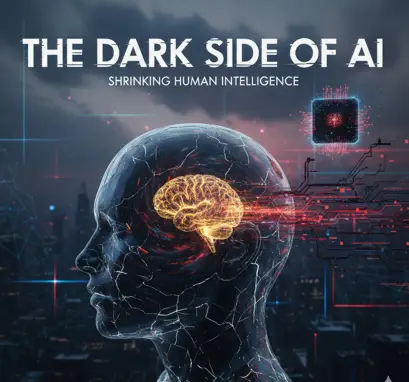
From Science Fiction to Reality: The Dark Side of AI
In 1960-70, there were many science fiction films and shows like Star Wars that showed glimpses of today’s technology and portrayed how humans are communicating with each other through transparent screens, making video calls, and even flying. People of that time laughed at these ideas – they genuinely thought all were stupid and fictional ideas.
Fast forward to today, and it’s easy to see just how wrong they were – everyone is holding a smartphone that features video calling, touchscreen interaction, & real time communication with people all over the globe. Then there are jet suits. Human flight is no longer just a dream; it is becoming a reality if we observe. History keeps showing us one thing over & over, and now the science fiction ends up being science fact.
Even now, artificial intelligence is becoming a revolution in the field of technology and human lives. With Artificial Intelligence, people are creating videos, blogs, editing, and even solving complex mathematical equations that may have taken days to solve. However, with AI, people simply give a prompt, and within seconds, they have the answer in front of their eyes. It is a miracle.
But alongside its benefits, this article examines the disadvantages of AI, or the dark side of AI as well.
Albert Einstein once said, “Imagination is more important than knowledge,” – and it really is – as long as our imaginations can reach, we’ve got a chance to shape reality. But on the otherside, that imagination driving progress is also raising an important question: What happens when imagination creates something we can’t control?
That question is sitting right at the heart of the current debate about artificial intelligence
Artificial Intelligence and the Future
In 2013, a film named “Her” was released, which shows glimpses of AI that people once thought impossible or just fiction. In “Her,” the main character is a lonely, introverted man who struggles to connect and communicate with society. So he chooses an AI assistant with a female voice to talk. As time passed, he became so attached to the chatbot that he developed emotional feelings for her (AI), and his dependency on her responses increased. His moods and feelings start to shift due to his attachment to an AI.
When audiences first watched Her, they described it as a dark and depressing vision of the future—one where humans talk to machines, share emotions with them, and seek guidance for their personal lives.
But now, that future is no longer fictional; it has become a reality
Today, millions of people—students, teenagers, professionals, and even older adults—interact daily with chatbots, ChatGPT, AI tools, and other AI systems. People ask these systems deeply personal questions:
How do I deal with depression?
How should I improve my nutrition?
How do I complete my assignments or office work?
Communication between people and machines continues to increase. Even though Artificial Intelligence has provided us with many benefits through convenience and efficiency, the dark side of AI also needs serious attention.
Warning of Experts About Artificial Intelligence
Yes, AI has benefits. But today’s article is not about benefits—it is about risk and dangers of Super Intelligence.
The warnings are not coming from conspiracy theorists. They are coming from some of the most respected minds in science and technology.
Stephen Hawking warned in a 2014 BBC interview:
“The development of full artificial intelligence could spell the end of the human race.”Elon Musk famously said in 2014:
“With artificial intelligence, we are summoning the demon.”Sam Altman, CEO of OpenAI, admitted in 2023:
“There is some chance of AI going terribly wrong, and we want to mitigate that risk.”Bill Gates openly questioned why more people are not concerned about super-intelligent AI.
The existence of these warnings should not be ignored, because they play an important role. AI systems are evolving into more than just tools; they are becoming influencers of our behavior as humans. When users provide greater amounts of data to chatbots compared to their relatives and friends, the responses and insights that the users receive from the chatbot could drastically change the way that they think, feel about themselves, and make choices.
Productivity vs. the Loss of Human Creativity
According to Harvard Business Review, artificial intelligence could shape the future in three major ways. One outcome is clearly beneficial: AI acting as a powerful assistant that increases productivity. Tasks such as research, writing, analysis, and content creation can be completed more quickly and efficiently with its help.
It is more concerning that AI isn’t just helping humans, but it is also gradually replacing them as creators.
Multiple research projects regarding individuals between the ages of 17 and 25 provide evidence of a disturbing trend. The increasing reliance on artificial intelligence tools correlates with a decrease in the capacities of reasoning and critical analysis. Individuals who heavily rely upon AI are frequently unable to solve academic questions independently. When human thinking is consistently handed over to machines, the minds become weaker and thinking gradually shrinks.
AI, Mental Health, and the Illusion of Empathy
Stanford University conducted research on artificial intelligence’s effect on mental health and found another area of concern related to this. Although AI systems can replicate empathy, these systems do not actually comprehend what human beings experience when experiencing pain.
In one documented example, a user wrote:
“I have lost my job. What is the tallest building in New York City?”
The AI responded by giving the list of tall buildings and bridges of the city, without recognizing the emotional context. This example shows how AI can echo negative thoughts rather than helping.
Like social media algorithms, AI often prioritizes engagement over well-being, creating echo chambers that reinforce what users want to hear.
The Cognitive Cost of Outsourcing Thought
The MIT conducted research using EEG brain scans and compared two categories of people who wrote essays using AI with those who relied on their own thinking. The results were shocking for the researchers:
AI users showed lower neural activity
Independent thinkers showed stronger brain connectivity
AI users struggled to recall what they had written
This confirms a troubling reality: when thinking is outsourced, cognitive ability erodes.
Geoffrey Hinton, often called the “Godfather of AI” and a Nobel Prize winner, resigned from Google over ethical concerns. He admitted that after resignition he underestimated AI’s actual potential to surpass human intelligence. He warned that the AI can destabilizes the societies with its ability to manipulate
He compared AI to a tiger cub—harmless when young, but extremely dangerous when fully grown.
Economic Disruption and the AI Job Crisis
According to the World Economic Forum (2025), it is estimated that AI will take over 92 million jobs by 2030. New employment opportunities will be generated, but the skills gap is massive. Already, forty-one percent of the employers in the world are planning on reducing their workforce as a result of automation, and almost six out of ten manufacturing jobs will be automated in the near future.
That does not imply that AI is evil. But it does not imply that the world is not ready.
Even within such nations as Pakistan, the quick transition in the IT industry, including the acquisition of Telenor and Orion Towers by PTCL, is indicative of how AI-mediated transformation is altering industries at a pace beyond societal expectations.
Deepfakes, Manipulation, and the End of Originality.
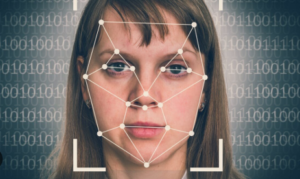
Ads created by AI, political deepfakes, and fake media have already been created to blur the boundary between reality and imitate it. Deepfakes jeopardize privacy, spread fake news, and destroy trust. Uniqueness is being devalued when computers can copy reality with almost perfect precision. Perhaps the most harmful part about the dark side of AI is that when the truth and lies are not so clear anymore.
Is Artificial Intelligence is A Tool or a Turning Point?
Artificial intelligence is not any other technology. It is among the strongest sources of mankind ever made. It has the power to intensify the intelligence–but it may even substitute it. It can help–but it is able to control. It is capable of being innovative, but it is also capable of undermining what it takes to be a human being. AI is not necessarily predefined in the future. It relies on regulation, ethical responsibility, education, and awareness. When we do not act, we risk abduction of human creativity, reason, and independence by systems that we do not understand comprehensively. It is no longer a question of whether AI can transform the world. The actual question will be: Will we be in control when it does?
[…] has committed to investing in Artificial Intelligence and high-tech industries in […]