
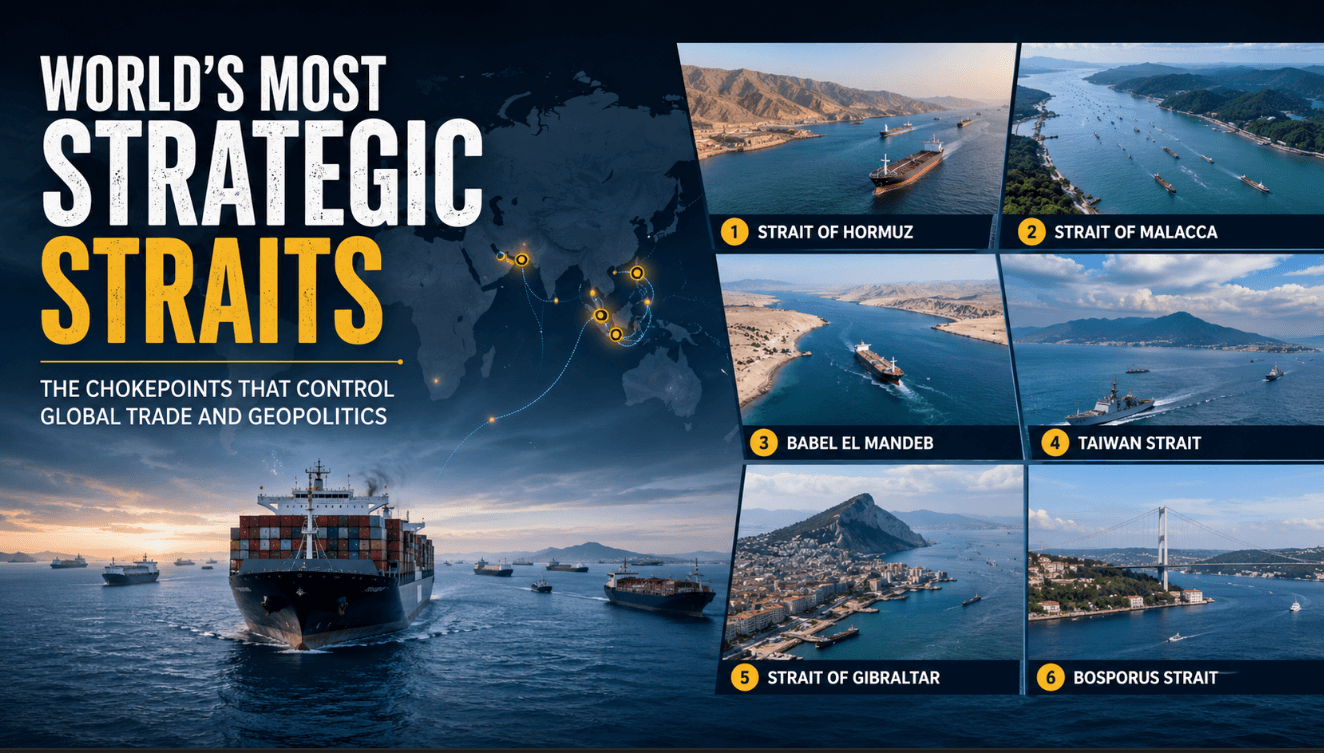
What Are Straits and Why Do They Matter in Global Trade?
STRAITS THAT CONTROL THE WORLD
possible. So straits are the narrow passageways that connect oceans or seas to each other. Straits are
extremely valuable because they control the world’s trade, oil and gas transport, and many countries
operate their navies, among other things. There are around 200-300 straits in the world, but only 6 are
major ones that largely shape geopolitics.
- Strait of Hormuz.
- Strait of Malacca.
- Babel el Mandeb.
- Taiwan Strait.
- Strait of Gibraltar.
- Bosporus Strait.
1. Strait of Hormuz: Critical Energy Chokepoint For World’s Trade & Crucial Strait
The Strait of Hormuz links the Persian Gulf to the Gulf of Oman, running alongside the Musandam Peninsula before opening into the Arabian Sea. At its narrowest, the strait spans roughly 30 miles, making it a remarkably compact passage given the enormous volume of global energy trade that flows through it.
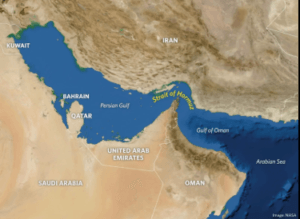
which is north of the Musandam Peninsula. The depth there is approximately 650 feet, and the water is
deep enough that ships can pass through the south of the Inshore Traffic Zone. It was the main shipping
zone of the strait in 1979.
The Strait of Hormuz stands as the world’s most strategically critical maritime chokepoint for energy transport. Several Gulf nations — including Saudi Arabia, Qatar, the United Arab Emirates, Iraq, and Kuwait — rely heavily on this narrow waterway to export their oil and natural gas to consumer markets across Europe and Asia.
oil price has increased globally. The world economy is being damaged, and international trade is disturbed.
2. Strait of Malacca: Asia’s Economic Lifeline and Global Shipping Hub
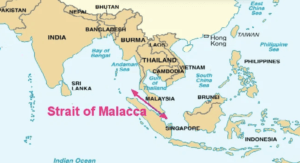
to the south of Peninsular Malaysia and Singapore, and connects the Pacific Ocean and the Indian Ocean.
It’s approximately 800 to 900 km long, it’s a funnel-shaped waterway which is 250km wide, and it’s
narrowest to 1.5 nautical miles near Singapore. Its average depth is around 82 to 90 ft. It’s the second
biggest chokepoint for oil.
An estimated 80 to 90 percent of the crude oil exported from the Gulf region passes through the Strait of Hormuz, underscoring its outsized role in global energy supply chains. Beyond oil alone, the strait accounts for roughly a quarter of all maritime trade worldwide, making it one of the single most consequential shipping lanes on the planet.
Because of its narrow waterway, the military is present in every region. Singapore holds the southern
entrance, and Indonesia and Malaysia have control over large coastal areas. According to the International
Maritime Bureau’s Piracy Reporting Centre reports that piracy, including attempted theft and hijackings, is a threat to
tankers in the Strait of Malacca. All these three countries control the security against pirates on the
navigation.
ships will need to reroute their pathways, which will cause mass economic destruction, prices of oil,
petroleum, etc. will increase, shipping costs will be high, energy prices will be affected badly, and delivery
time will also increase. So the Strait of Malacca is not only a regional but a global chokepoint.
3. Bab Al Mandeb: The Most Dangerous Maritime Chokepoint
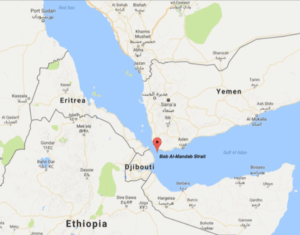
Mandeb. It’s also known as the Gate of Tears. The sea route of this strait is between Africa and the Middle East connecting the Red Sea to the Gulf of Aden and the Arabian Sea.
usually attack the ships that are from Israel or related to Israel. They attack the trade routes to show their
capabilities of affecting world trade. After the Iran war in 2025, half of the trade was disrupted by the
Houthis.
to maintain their strategic influence.
4. Taiwan Strait: The Geopolitical Flashpoint That Could Trigger World War III
has the ability to conduct a World War III. The strait connects East China to West China and separates
Taiwan from China.
The Taiwan Strait stretches approximately 350 kilometres in length with an average width of around 180 kilometres, serving as the waterway that separates eastern and western China. Its depth is relatively shallow, averaging between 40 and 60 metres across most of its expanse, though it reaches a maximum depth of around 120 metres at its deepest points.
production will be affected, world economy will have to face a sudden pull.
A disruption to the Taiwan Strait would send economic shockwaves across numerous nations, but two of Washington’s closest allies in the region — Japan and South Korea — would face particularly severe consequences. According to estimates from the Center for Strategic and International Studies (CSIS), approximately 32 percent of Japan’s total imports and around 25 percent of its exports passed through the Strait in 2022, amounting to a combined trade value of nearly $444 billion.
South Korea depended on the Taiwan Strait for 30 percent of its imports and 23 percent of its exports, amounting to about $357 billion in goods.
Japan sources over 95 percent of its crude oil from a handful of Middle Eastern nations, as does South Korea, which draws around 65 percent of its oil from the same region. Because maritime shipping naturally follows the most efficient routes, a substantial portion of this energy trade moves through the Taiwan Strait.
However, the strait’s economic significance extends well beyond the Indo-Pacific region. Notably, the four nations most dependent on it are located in Africa, and they share a common economic characteristic: their financial wellbeing rests largely on exporting raw materials to Asian markets, particularly China. The Democratic Republic of the Congo, for instance, channeled close to $13 billion worth of copper, cobalt, and other metals through the strait, representing approximately 62 percent of its entire export volume. Eritrea, Angola, and Gabon are similarly reliant on the strait as the primary conduit for their trade flows.
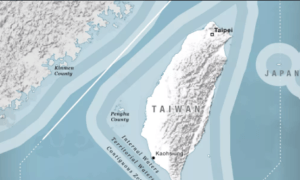
considers Taiwan as a part of the country, while Taiwan calls itself a separate country. That is the biggest
reason Chinese military, naval patrols, warships, and fighter jets are seen on the strait. The Taiwan Strait is
important to the US, which is why it conducts operations of Freedom of Navigation.
the open Pacific Ocean. Between the Philippines, Taiwan, and Japan lie many small islands and shallow
waters unsuitable for submarines.
toward America. This is another reason China considers Taiwan strategically vital, as gaining Taiwan would
give China direct access to the Pacific Ocean.
involve two global superpowers: America and China.
5. Strait of Gibraltar
The Strait of Gibraltar has long carried the legendary name “the Pillars of Hercules,” a title rooted in ancient mythology that reflects the strait’s historical significance as a gateway between worlds.
The strait is a passageway for the ships to transport oil, natural gas, electronic goods, automobiles, textiles, and agricultural products. Millions of vessels pass through this strait. The Strait connects the Atlantic Ocean to the Mediterranean Sea, and lies between Northern Spain and Southern Morocco.
metres. The Strait has been under war for years, and many countries have fought for control of the Strait,
including Africa and Europe.
Historically, numerous conflicts were fought over the strait due to its commanding position at the entrance to the Mediterranean Sea, with rival powers seeking to dominate this strategically vital passage. Today, control over the area rests primarily with Britain, which has maintained its presence there through its overseas territory of Gibraltar.
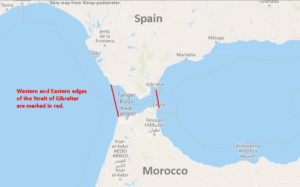
indirectly present, because NATO is monitoring Naval operations. The military forces are present there to
maintain shipping routes, protect them from piracy, and track submarines and warships.
6. Bosphorus Strait: Turkey’s Strategic Waterway Connecting Europe and Asia
The Bosphorus Strait serves as one of the key natural waterways linking the Black Sea to the Sea of Marmara, which in turn connects to the Mediterranean Sea through the Dardanelles. Beyond its role as a maritime passage, the strait also marks the boundary between Asia and Europe, running entirely through the territory of Turkey and functioning simultaneously as both a connector and a dividing line between two continents.
kilometres, while its depth varies from 36 to 124 metres.
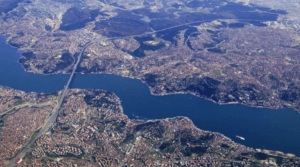
Also referred to by its Turkish name Bogazici, the strait holds considerable strategic and economic importance as a vital shipping corridor connecting the Black Sea to the broader world’s oceans. Military authority over the waterway rests exclusively with Turkey, which oversees the strait through naval monitoring and coast guard operations. Its geopolitical weight is further amplified by the competing interests of Russia and NATO, both of which regard the Bosphorus as a passage of significant strategic value.
Conclusion: Why These Six Strategic Chokepoints Will Continue to Shape the World Order
shape the future. A small conflict can cause the world’s economy to be distorted, as we have seen in the
recent Iran-American War.