
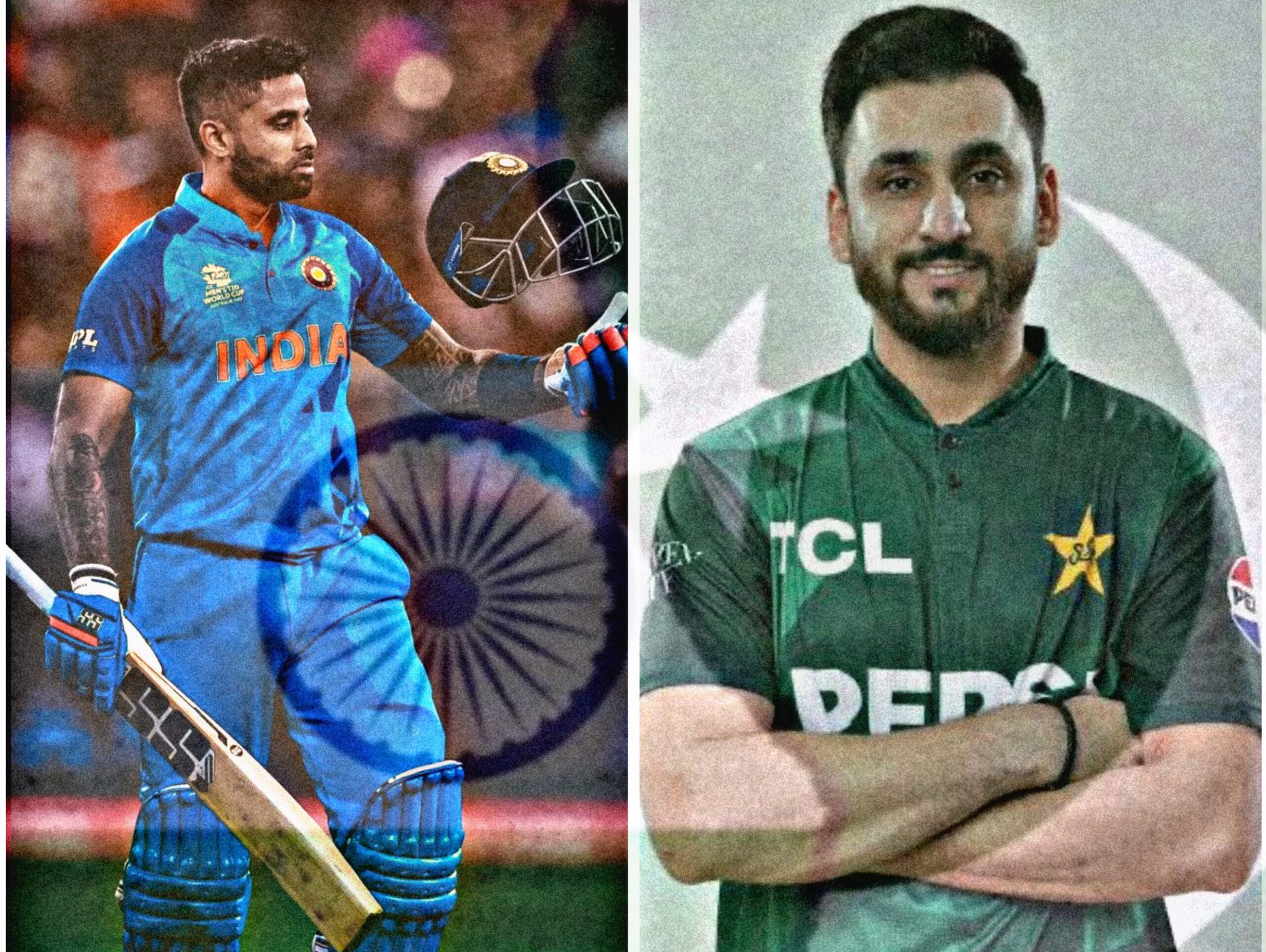
India Vs Pakistan, Bangladesh Stand, and ICC Controversy: Has the Balance of Power Shifted in World Cricket?
In South Asia, cricket has never been only a game; it has always held elements of history, politics, pride, emotion, and power struggles. In recent weeks, the events surrounding the World Cup fixtures have once again shown that cricket is often a cover for diplomacy in this part of the world.
When Mohsin Naqvi made a statement in his media briefing that “Pakistan may decide to withdraw from the World Cup match against India due to Bangladesh Issue” later after the terror attacks in Balochistan put more oil in the fire as Pakistan Government tweeted officially that Pakistan will play the ICC Men’s T20 World Cup but will boycott the match against India, it sent shock waves through the corridors of cricket.
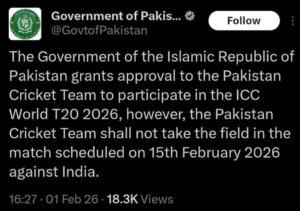
As the date of the cricket game draws closer, the importance of the upcoming match between India and Pakistan has become uncertain because of some recent World Cup controversies. It seems that this contest has become more about politics between countries than about competition.
The question is, how can Pakistan — which has a much weaker economy than the BCCI — put pressure on the ICC?
Let’s unpack this step by step.
A History of Pakistan and Bangladesh: From 1947 to 2026
If you ever read the history of South Asia, it feels like a cinematic sometimes.
- 1947: East Pakistan and West Pakistan became one country after independence from India.
- 1971: East Pakistan became Bangladesh, with India’s support, gaining independence from Pakistan.
- And now in 2026, Reports are speculating that Bangladesh and Pakistan have aligned together against the BCCI and Jai Shah, the chairman of the ICC.
Remember that history never repeats itself; it often rhymes.
This time, the battlefield was not political sovereignty, but the fairness of sports.
The Trigger: Bangladesh and the Security Argument
There was a great deal of controversy surrounding Bangladesh, who had raised concerns on playing games in India due to rising tensions and an atmosphere of hostility towards them in the country, following the removal of Sheikh Hasina from power in politically unstable conditions in Bangladesh, and then the breakdown of relationships between the two nations as well as reports of communal tensions resulting in anti-Bangladesh sentiment in certain parts of India.
One high-profile example was left-arm pacer Mustafizur Rahman, who was reportedly removed from an Indian league contract without a clear explanation. Officially, there may have been “technical” reasons. However, people within the Indian media generally believed that he was removed due to political pressure.
Bangladesh was also concerned that sending its national team under these circumstances would provide security risks or could provide hostility from the public.
As a result, they requested that an alternate (neutral) venue be provided (as had happened when India played games in Dubai during Pakistan-hosted tournaments).
The ICC then replied, basically stating you can either play in India or there is the chance you may be excluded from the T20 World Cup.
Bangladesh was effectively sidelined.
Pakistan’s Boycott of the Match against India
Why the India Vs Pakistan Match Is Financial Gold
The India vs Pakistan World Cup clash is arguably the second most-watched sporting event globally, after the FIFA World Cup Final.
Let’s examine the numbers:
FIFA World Cup Final: Over 1 billion viewers.
India vs Pakistan World Cup match: Estimated 350–400 million viewers.
Super Bowl (global): Around 150 million viewers.
If you remove the FIFA final, India Vs Pakistan arguably becomes the most-watched recurring sporting event in the world.
Advertising Revenue of Ind Vs Pak Match
In India alone:
A 10-second advertisement during the match can cost hundreds of thousands of dollars.
Total ad revenue for a single India Vs Pakistan match can reach approximately $60 million in one market.
Combined global match value (ads, rights, sponsorships, tickets): estimated $160–200 million.
Full commercial valuation of the event ecosystem: close to $300 million.
Now imagine that the match is not happening. Broadcasters would demand refunds. Sponsors would sue. Rights holders would face massive financial losses. JioStar reportedly purchased ICC broadcasting rights for 2024–2027 for nearly $3 billion — roughly $1 billion per year.
If India–Pakistan collapses, the financial architecture shakes.
That was the leverage.
ICC Under Pressure
Once Pakistan signaled withdrawal, panic followed.
ICC officials flew to Pakistan.
Bangladesh board representatives joined discussions.
Diplomatic channels reportedly opened.
Because if Pakistan pulled out, ICC risked losing nearly 20–30% of tournament revenue tied directly to that one match.
That is not a small negotiation chip. That is financial oxygen.
For the first time in recent years, ICC found itself under pressure from a board far smaller economically than BCCI.
How?
Because while BCCI generates nearly 80% of ICC revenue indirectly, the India–Pakistan match requires both teams.
No Pakistan, no spectacle.
No spectacle, no money.
Mohsin Naqvi’s Radical Style
Mohsin Naqvi has developed a reputation for bold, confrontational decisions. He previously locked the Asia Cup trophy in a dispute scenario, refusing ceremonial gestures he deemed disrespectful.
Love him or criticize him — his approach is assertive. This time, instead of pleading for fairness, PCB used leverage.
An “eye for an eye” strategy.
And it worked.
What Did Pakistan Secure – Pakistan India Match Update?
Eventually, after negotiations:
Bangladesh would not face fines or sanctions.
Its full ICC membership status would remain intact.
Bangladesh reportedly secured a future ICC event hosting commitment (2028–2031 window).
Pakistan agreed to play the February 15 match.
Crisis defused. Match restored. Money saved.
But the power equation shifted.
The Bigger Question: Is ICC Too Dependent on BCCI?
This controversy reignited a long-standing debate.
Revenue Dependency
Around 80% of ICC revenue originates from the Indian market.
Approximately 38.9% to 40% of ICC revenue distribution reportedly goes to India.
Former BCCI secretary Jay Shah rose to ICC chairmanship at a relatively young age, strengthening perceptions of influence.
When one board generates most of the income, governance neutrality becomes difficult.
Examples often cited:
Venue flexibility when India requests neutral locations.
DRS implementation debates historically influenced by Indian opposition.
Pre-assigned semi-final venues in previous tournaments.
Whether coincidence or systemic bias, perception matters. And perception increasingly suggests imbalance.
IPL vs International Cricket
Another structural concern is league dominance.
The IPL pays more than many national contracts. Players gravitate toward leagues. Bilateral series lose value. Smaller cricketing nations struggle.
If revenue centralization continues:
Zimbabwe
Ireland
Netherlands
Afghanistan
Nepal
may find it harder to survive competitively. International cricket risks becoming secondary to franchise tournaments. That would be a dangerous long-term trend.
ICC vs FIFA: A Governance Comparison
FIFA operates on a “one country, one vote” principle across 211 member associations.
Revenue contribution does not equal voting power.
ICC, historically, has operated with stronger influence from a few major boards: India, England, and Australia.
Critics argue that revenue sharing lacks transparency.
Venue allocation appears ad hoc.
Smaller nations lack structural equity.
Reform discussions are not new.
But implementation remains limited.
The Role of Cricket Diplomacy
Cricket has historically reduced tensions:
During the Musharraf era, cricket diplomacy improved the India–Pakistan dialogue.
Bilateral tours opened communication channels.
Sports can soften rhetoric.
They humanize adversaries.
They create shared emotional experiences.
If politics dominates every fixture, that bridge collapses. And once bridges collapse, rebuilding trust becomes harder.
A Balanced View
Was Pakistan’s stance justified?
From a negotiation standpoint: yes.
From a financial leverage standpoint, strategically smart.
From a diplomatic standpoint: risky but effective.
Was ICC’s initial firmness necessary?
Perhaps — to maintain procedural authority.
Was Bangladesh unfairly treated?
That remains debated. But one thing is clear:
This episode exposed how fragile cricket’s power structure truly is. When economics meets geopolitics, neutrality becomes complicated.
The Real Risk: Toxicity in Cricket
We are seeing:
Trophy snubs.
Venue refusals.
Political rhetoric entering commentary.
Fan polarization is intensifying.
Cricket risks becoming a proxy battlefield. If radicalism rises further, international cricket may fragment. And once fragmentation begins, leagues will dominate, nationalism will intensify, and global unity in sport may weaken.
The Way Forward
The future must focus on:
Governance reform within ICC.
Transparent revenue sharing.
Equal treatment across boards.
Clear neutral venue policies.
Reduced political interference.
Strengthening smaller cricket nations.
Sport should be competitive — not vindictive.
Assertive — not aggressive.
Proud — not polarizing.
Unfortunately, all this is happening in International Cricket.
Final Thoughts
The February 15 match will likely go ahead.
Millions will watch. Billions will be generated. Emotions will run high. But behind the boundary ropes, a bigger game has already been played.
This wasn’t just about one fixture. It was about leverage, Fairness, and financial power. And the future structure of global cricket.
Mohsin Naqvi’s move demonstrated that even smaller boards can assert influence — if they understand the economics of the system. However, long-term stability requires cooperation, not confrontation.
India and Pakistan — two nuclear powers, two cricket giants, nearly 1.6 billion people combined — cannot remain in perpetual sporting standoff. Cricket could be a bridge, or it could become another border.
The choice lies not with one board — but with all stakeholders. For the sake of the sport, hopefully, sense prevails over sentiment, and cricket remains cricket, not politics in disguise.