
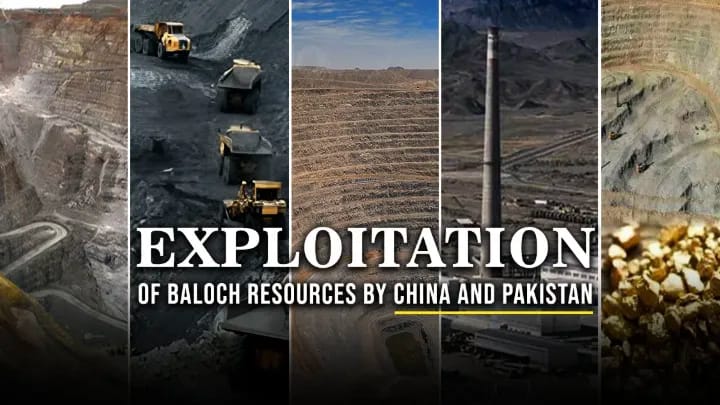
Balochistan: Exploitation of Resources, Power, and the Price Paid by Its People
Recently, we saw a man in handcuffs. He is no ordinary man. His name is Nicolás Maduro—month ago, the President of Venezuela. Today, he stands accused in an American court of crushing democracy and allowing drug mafias to poison an entire region.
From Venezuela, the story shifts to Congo, where rivers of blood flow as armed groups terrorize civilians and target schoolchildren. Then to Sana’a, Yemen, where destruction reigns as factions fight for autonomy.
On the surface, these conflicts appear different. In reality, they share one root cause: natural resources.
Venezuela holds the world’s largest oil reserves. Congo is rich in cobalt, copper, and gold. Southern Yemen controls Bab-el-Mandeb, one of the world’s most strategic maritime chokepoints.
Sometimes, a region’s strategic importance becomes a curse for its people.
This is the story of such a land.
This is the story of Balochistan.
Pakistan’s Trillion-Dollar Question
Pakistan’s Prime Minister has stated that the country holds mineral reserves worth nearly $6 trillion—wealth that only needs to be extracted. Names like Sui, Saindak, Reko Diq, and Gwadar are familiar to most Pakistanis, yet very few have ever seen these places.
Let us begin with Sui.
Sui: Energy for the Nation, Darkness for the Locals
Natural gas was discovered in Sui in 1953. By 1964, it was supplying Lahore and Karachi. Quetta, however, received gas 22 years later, and even then, mostly for cantonment areas.
Despite producing surplus gas, much of Balochistan still relies on firewood. Gas extracted from Sui fuels major cities in Punjab and Sindh.
The grievance deepens with royalty distribution. Gas royalties in Pakistan are calculated on production cost, not market value. Since Sui’s gas was cheap to extract, Balochistan received significantly lower royalties. Even today, despite contributing around 40% of national gas production, the province receives only about 25% of total royalties.
This system remains one of the oldest sources of resentment in Balochistan.
Gwadar: From Neglect to Obsession
In 1958, Gwadar was bought from Oman for roughly 5.5 billion Pakistani Rupees (approximately 1.15 billion US dollars at that time). But this port city has an extensive history dating back to the 18th century; it was granted to an Omani prince by Oman as a refuge after he fled a succession war.
For nearly 150 years, Gwadar remained under Omani control. Pakistan finally acquired it with British mediation.
Today, Gwadar is central to global geopolitics—but locals still lack clean water, electricity, and gas. Massive infrastructure exists, yet economic life does not.
There is a port, but no ships.
An airport, but no flights.
Hotels, but no guests.
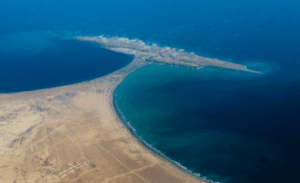
China, CPEC, and Strategic Reality
China holds over $3.5 trillion in foreign reserves. Seeking higher returns and global influence, it invested heavily in developing countries under the Belt and Road Initiative.
CPEC emerged from China’s need to connect its underdeveloped western regions to global trade routes. Gwadar became the centerpiece.
However, neither the Balochistan government nor local communities were meaningfully included in Gwadar’s agreements. Land disputes, forced acquisitions, and a lack of compensation fueled unrest.
China’s investment enthusiasm has visibly slowed—perhaps due to instability, perhaps due to unmet expectations.
Chaghi: Mountains of Wealth, Valleys of Neglect
Chaghi is Pakistan’s largest district—larger than several European countries combined—yet sparsely populated and deeply impoverished.
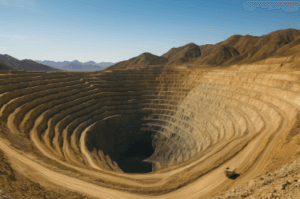
Beneath its black mountains lie vast reserves of gold and copper.
Saindak
Discovered in 1970, Saindak became operational in 1995. In 2002, it was leased to a Chinese company. Over time, Balochistan’s share increased to 37%, but transparency regarding profits remains absent.
According to Chinese sources, profits may exceed $3 billion, while reserves are expected to run out by 2037.
Reko Diq: Gold, Courts, and Costly Mistakes
Reko Diq holds gold worth over $74 billion.
Mismanagement, broken agreements, and legal blunders led Pakistan into international arbitration at ICSID, where it was fined nearly $11 billion worth of penalty, one of the largest penalties in history.
Pakistan signed such agreements decades earlier without fully understanding their consequences. India, notably, never did.
Eventually, a revised deal was reached under Imran Khan’s government, granting 50% ownership to Pakistan, with half of that going to Balochistan.
Yet after three decades, the common citizen has gained almost nothing.
The Baloch Insurgency
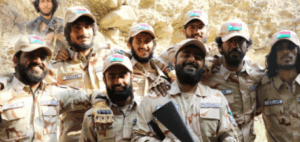
The long-standing Baloch insurgency has roots in the provincial struggle for resources and autonomy. Over the years, various armed groups such as the BLA, the BLF, and the BRA have developed, targeting infrastructure, security personnel, and economic projects.
There are a number of factors that have contributed to the insurgency in Baluchistan including marginalization, lack of economic opportunity and violation of basic human rights, particularly with relation to issues of local control over natural resources and enforcement of fair royalties.
While military campaigns and development programs have led to decreased violence, there continues to be significant tension within Balochistan.
While the majority of Baloch people oppose violence and support peaceful political and economic solutions, continued stability within the region will ultimately depend on equitable resource distribution, inclusive governance, and recognition of local community rights.
👍
This is such a sorry state of affairs – seeing such an injustice is awful. These injustices are fueling the separatist movement. But know dear brother, it is because of the corrupt establishment that is imposed on us. Ordinary people in other provinces understand your pain. If there is a truly representative government in Pakistan these wrongs can be addressed. But military insurgency and terrorism cannot be justified. There should be effort to create awareness for the Baloch’s right through peaceful means and increased human interaction with Pakistanis. You can use social media to highlight issues and gain support from Pakistanis in other provinces.