
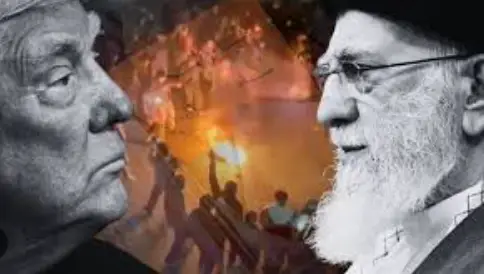
Conquering Your Own Country on the Enemy’s Tanks
Experts are expecting that Donald Trump is thinking about something worse than strikes in Iran. History always teaches us one simple truth: a country never gets its freedom from external powers. Calling it a freedom while relying on the help of others is not a liberty; it is the demolition of democracy.
In reality, it is just a display of power, and later its cost is paid by the nation in the form of exploitation, as we have seen before in Iran and Iraq, and now in the present, Venezuela is a live example for us.
Iran is currently facing the question: Is the current situation in Iran truly a fight for human rights, or is it part of an established pattern of undermining a nation internally, followed by outside interference and the country being destroyed in the name of help?”
The fact of the matter is that U.S. carrier strike groups remain stationed in the Persian Gulf. They have not departed. Instead, they are waiting for ground conditions to be entirely right for a decisive attack.
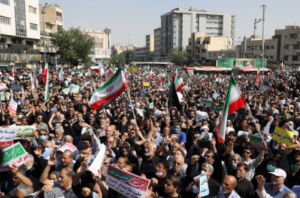
Sanctions, Statements, and the Attack That Never Happened
Why Didn’t the Attack Happen?
Until recently, it looked like an attack on Iran was going to happen soon. Air defence systems in Qatar had been turned on, evacuations of U.S. officials occurred, Iran closed its airspace, and Gulf states were openly warned that allowing their bases to be used would provoke retaliation.
Everything indicates that an attack was planned to occur soon or later.
The primary reason was that the internal “killer network” required to spread chaos on the ground—alongside aerial attacks—was not fully prepared. This assessment is reported by some Israeli newspapers and The New York Times. Maybe there will be surprise attacks on Iran.
The Real Objective
If we look closely, the goal is not merely to remove Iran’s religious leadership. The real and far more dangerous ambition is to fragment Iran—just as Syria was torn apart.
Kurdish and Azerbaijani regions in the north
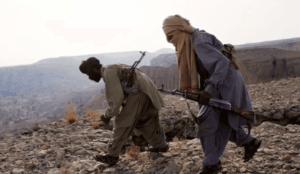
Baloch separatist movements in the south
Extremist groups linked to ISIS in the east
The Claim of 12,000 Deaths & Reality
Iran International websites indicate that approximately 12,000 people have been killed by the Iranian government since the protests began. This is a huge number, and probably impossible to hide in this digital age.
This does not mean that there has not been any violence in Iran, or that violence does not exist today. Videos of violence are continuously being posted, and both sides of this conflict appear violent. While there is violence taking place, both sides are using propaganda to try to persuade people of their version of the truth, as part of an information war that is paving the way for military action to be taken against the government of Iran.
A Familiar CIA Playbook
History shows this strategy is not new:
Impose sanctions
Convince the public that their government has failed
Fund protests with money, technology, and narratives
Launch direct intervention under the banner of “assistance.”
This pattern was seen in:
1953 with Prime Minister Mossadegh
The 1970s with the Shah of Iran
The Iran-Iraq War through Saddam Hussein
And now, once again, Iran
Human Rights—or Power Politics?
If this issue were truly about human rights, then there would be as much concern over Gaza, Yemen, and Afghanistan as there is now. However, the reality is that this is not about democracy, but rather about control.
If Iran were to:
Stop challenging Israel’s regional authority
Roll back its nuclear program
Accept partial Western control over its oil and gas
Then the loud cries of “human rights” would suddenly fall silent.
The Reality of Regional Alliances
A country that is not a member of a functioning strong alliance for itself is open to attack and becomes a target of another country in today’s world. As a result, Pakistan, Saudi Arabia, and Turkey are forming a mid–tier defense pact and Weapons Cooperation relationship for The Future.
This is all about survival, not aggression. Because Iran’s isolation has become its greatest punishment.
Conclusion
You can criticise the policies of the government, but getting freedom with the help of a foreign country through bombing and long-term destruction is a dangerous illusion.
Democracy is never imposed; it develops naturally in the hearts and minds of people as a result of struggle, study, and long-term perseverance. All other things are merely replacements for the true process of growth and development and, as such, lead to destruction.