
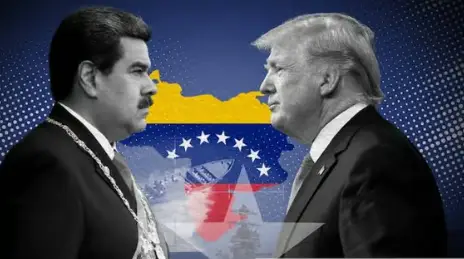
Does Kidnapping President Nicolás Maduro Give Control Over a Country?
Naked Power, Outcome Control, and the Reality of the “Donroe Doctrine”
Thirty-six years ago, the United States captured the president of Panama. At that time, officials described the action as essential for “law,” “democracy,” and “stability.” But the real question today is straightforward: Did Panama become a pro-American state afterward? Did it become a permanent ally of Washington?
The answer is clearly no.
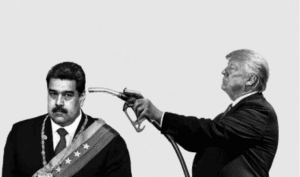
Why Don’t Powerful Countries Simply Conquer Weaker Ones?
The Missing Factor
Every wise, powerful nation knows one important truth: power has its limits. This becomes clear only after it is tested.
The real challenge isn’t just about having the ability to strike or invade; it’s about controlling the aftermath. Can a country influence political behavior over time? Can it create stable and positive results years down the line? Typically, outright force falls short in this regard.
Before taking any military action, wise and serious leaders ask themselves a crucial question: Will this decision ultimately benefit us, or will it lead to even greater issues in the future? That’s why many choose diplomacy and economic strategies over brute force. They often lead to better outcomes and long-term advantages.
Iran 1953: A Classic Failure of Outcome Control
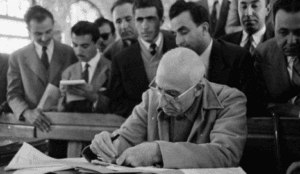
In August 1953, the Prime Minister of Iran, Mohammed Mossadegh, was removed from office (overthrown) as a result of a joint operation with the support of both the US and the UK. As part of this operation, Reza Pahlavi was installed as the new king with absolute power.
On the surface, this was a success. American interests were secured. Oil access was restored. Iran was “controlled.”
But did the U.S. control the long-term outcome? Absolutely not.
Just 26 years later, the Iranian Revolution erupted—bringing to power one of the most aggressively anti-American governments in modern history. Ironically, even the Shah himself had begun pursuing nuclear ambitions independent of U.S. interests.
The operation achieved short-term dominance but produced a long-term disaster.
Panama and Venezuela: Repeating the Same Mistake
In 1989, the United States took control of Panama’s president, Manuel Noriega, but now we observe that Panama is no longer aligned with the United States. The U.S has already expressed its concerns over Panama’s growing relations with both China and Russia. We observed this scenario with Venezuela as well. The strategy of capturing or politically undermining President Maduro was based on three primary objectives of the United States: Overthrowing Maduro as president, acquiring access to the oil reserves and rare Earth minerals in Venezuela, and severing ties between Venezuela and both China and Russia.
All three objectives have failed.
Why Regime Change Failed
Maduro’s party remains in control of the government, with his vice president still leading the government in the country. If the U.S. pressures for a new government, it would likely be seen as a puppet regime, making it hard for that government to meet American expectations. This situation has actually tightened their unity against outside influence.
Why Oil Control Failed
After the kidnapping, Venezuela’s leaders turned down U.S. requests without hesitation. They seriously ramped up armed civilian militias for defense, which raised security concerns dramatically. Consequently, major oil companies, like Exxon, decided not to invest in Venezuela, saying that the situation was too unstable. Ironically, these actions hindered the economic benefits Washington wanted to achieve.
Why China and Russia Became More Important
Naked Power Creates Heroes, Not Submission
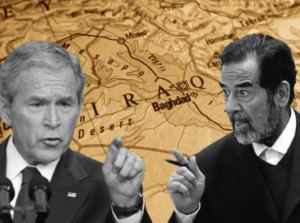
Monroe Doctrine vs. “Donroe Doctrine”
President James Monroe’s doctrine in 1823 emerged under very different conditions. At that time, Latin American states welcomed U.S. protection against European colonial powers. The doctrine offered stability.
Today’s reality is the opposite.
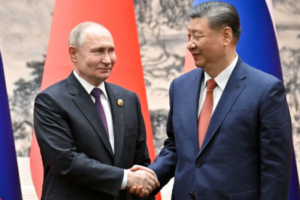
No European or Asian power is attempting to colonize Latin America. China and Russia engage through trade, not conquest. No vacuum requires American “protection.”
Trying to revive a 200-year-old doctrine through force ignores the most basic rule of geopolitics: context matters.
The Truth About Power
Power works best when it is shown, not constantly used.
The more force is applied, the faster its effectiveness declines. This is true of military power, economic sanctions, and even currency dominance.
The overuse of sanctions and coercion has already pushed major powers away from the U.S. dollar. Energy trade is increasingly conducted in non-dollar currencies. America’s influence weakens with each act of overreach.
The One Question That Stops Great Powers
So what is the one question that prevents great powers from using naked force everywhere?
Can we control the outcome after the action?
If the answer is no, then power becomes self-defeating.
Naked power may destroy—but it rarely governs. And history is brutally unforgiving to empires that forget this truth.
[…] in the form of exploitation, as we have seen before in Iran and Iraq, and now in the present, Venezuela is a live example for […]
[…] United States has used variations of the Monroe Doctrine for more than one hundred years. It said that no foreign power would be accepted within the borders […]