Nietzsche’s 18 Psychological Truths: How to Read People Beyond Their Masks
Friedrich Nietzsche explains psychological facts that will help people to read the actual face of the human instantly, which he is hiding behind the unseen mask.
What you know should be more meaningful than what you think.
The truth is, you’re as intelligent and aware of signs as a person needs to be to survive, even if no one has shown you how to read the signs so you can survive.
Even before there is ever anything spoken to you, every person that you will encounter during your lifetime will leave a multitude of details about themselves every time that you are with them.
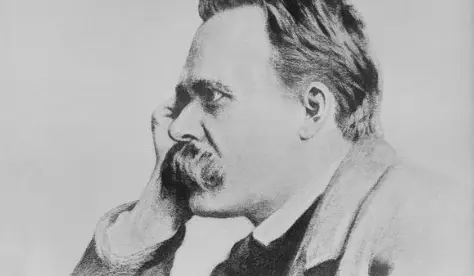
Instead of relying on what someone tells you, rely on the non–verbal cues they give off, such as their response time and body language. As a philosopher, Friedrich Nietzsche looked at human psychology and put forth a theory that most of humanity does not view themselves as a “liar,“ but rather has a “survivor” mentality where they must wear a mask for self–protection.
Part One: The Mask – Why People Are Not What They Appear
We‘re trained as children to trust what we are told. We learn that language is what represents the truth or reality; however, Nietzsche warned us that language was often used as a means of survival rather than honesty.
Words are not necessarily an indicator of what a person means to express; instead, they often represent that person‘s fears, egos, and the need to belong.
The persona or identity that someone presents to us does not represent who that person is; instead, it’s their protective shield or covering.
Nietzsche once said,
“Every profound spirit needs a mask.”
Not a criticism, but a caution worth noticing.
1. Everyone wears a mask to survive
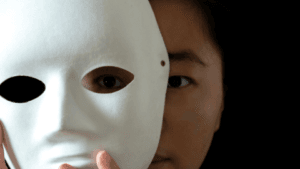
To be accepted by their peers, people create versions of themselves for others‘ acceptance. This alone does not make them a fake person, but rather because society punishes people for being vulnerable. The authentic self is only revealed when the person creates a facade of who they want to be, and that facade falls apart, usually from an uncomfortable situation.
Concentrate on the tension. The tension is where the true self begins to emerge.
2. What someone hates in others reveals what they hide
Projection is confession.
If someone has made a habit of thinking and pointing out the incompetence, arrogance, or dishonesty in others, it might not be far–fetched to look at that person and see the same traits being expressed.
3. Silence reveals more than words
Can’t answer a question directly. Always rehearses answers. Changes topics frequently. Nietzsche thought silence is more powerful than speech, especially when you’re dealing with someone who is feeling exposed or vulnerable.
4. Excessive virtue is often disguised as vanity
Often, loud moralists have superiority complexes. People who have real goodness do not need to announce their “goodness“.
5. People lie to themselves before they lie to you
“I am okay.“ “I don‘t care.“ “I have moved on.“ These statements are valid, and they‘re often repeated over time to become so.
6. Where someone feels superior, they hide inferiority
True confidence does not need to be socially validated through competition. When one dominates, boasts, or has control over someone else, this may often be an outward display of fear.
When we read people, we’re not judging them; Rather, we’re seeing the scared human being inside of a suit of armour.
Part Two: The Cracks – Where the Mask Begins to Break
As per Nietzsche, the identity of an individual isn’t predetermined and instead, is a way to present oneself to the environment of today. However, when the individual feels that their ‘identity’ will be taken from them, they begin presenting their ‘truth’.
7. Most actions are driven by unconscious fear
Making things very complicated by overexplaining. Disappearing. Agreeing but saying ‘no’ out of fear. Instead of asking individuals what they desire, you should find out what they fear losing.
8. Criticism is a mirror
9. False confidence often hides guilt
The over certainty is performance. Peace is an accepted state of existence.
10. Exaggeration betrays insecurity
“I have no interest in other people‘s views.“ “I will never be sad again.“ Strong declarative statements are an attempt for the ego to eliminate uncertainty.
11. The desire for control masks inner chaos
Obsessive order often hides inner disorder.
The tighter the grip, the deeper the fear of collapse.
12. Loud Acts, Quiet Truths
Being constantly under scrutiny, being watched, and constructing one’s identity based on others’ opinions is a need, not an ability; therefore, those who truly know themselves do not have to rely on being viewed by others to affirm their existence.
At this point, you no longer hear words. You begin to visualize the relationships between many ideas. You start seeing patterns.
Part Three: The Soul – Where Behavior Is Born
Belief is the basis for every action, and every belief is based upon some form of an emotional wound.
13. Behind Every Word Lies Pain, Not Logic
Our opinions are really just a covering for emotional scars. Tendencies we exhibit as emotionally reactive are justified through an explanation grounded in logic.
14. How someone treats weakness reveals their strength
Observe how certain individuals conduct themselves when there is no need for domination. The best example of true power is demonstrated in self–control.
15. Fear of being forgotten creates attention-seeking
The appearance of vanity is a mask that hides the true pain of invisibility. The sounds we hear may actually be cries for assistance rather than boasting.
16. The person they attack is often the one they envy
Desiring what we can’t have is envy. It’s much easier to hurt those who remind us of what we wish we hadn’t left behind.
17. People act out childhood, not beliefs
Behavior is biography. We will often act out the same things we did to survive as children.
18. Patterns are confessions
Ghosting, working too much, and avoiding relationships are not mistakes, but rather ways to cope due to our pain. People will demonstrate their true selves repeatedly through their actions, not through their words.
The Final Realization
This isn‘t about controlling the psychology of others through your own thought processes or manipulation. The purpose of Nietzsche‘s message is for you to clearly understand who and what is outside of yourself so that you will no longer be manipulated.
Through this clear vision, you will form new connections with others. You will also see the fear of their arrogance; the wound behind cruelty; the child hiding behind a mask, and as a result, you will become empowered to not take their behavior personally, to stop hating them or reacting in anger, and most importantly, to start seeing yourself in a way that is consistent with how he viewed you as an individual.
Everything he wrote is not only about each of those individuals but also about you.
This is just the beginning of your journey. Learning to look past the masks around you and finally meet the real version of yourself in a world that hides so much.