How to Make Friends as an Introvert with Social Anxiety
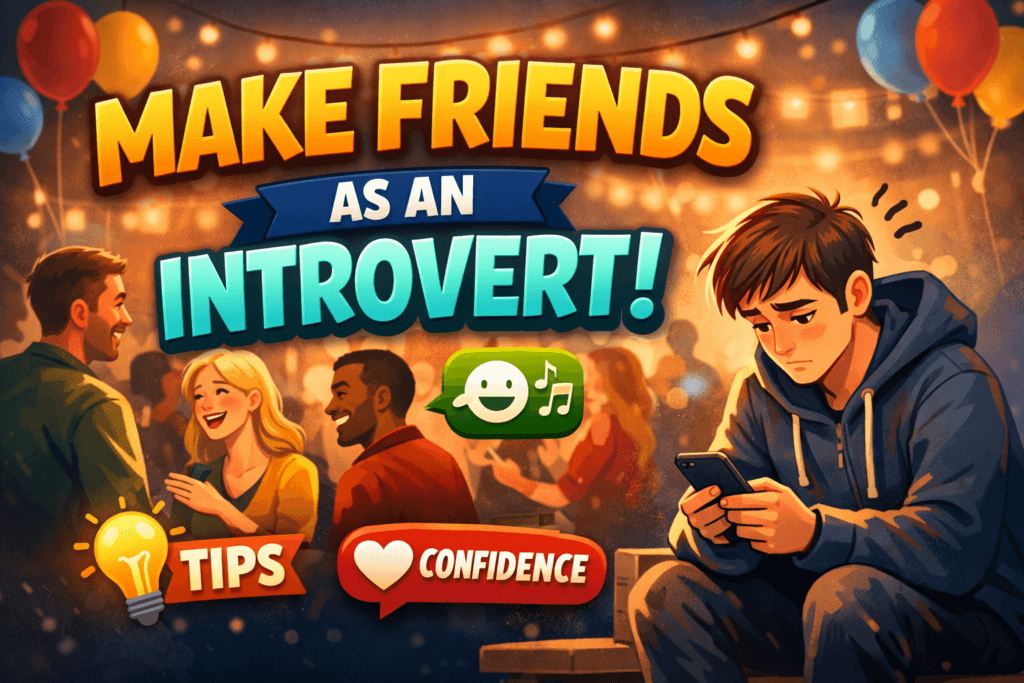
Has it happened to you that you are an introverted person and went to a party? Everyone at the party is talking with each other, laughing, and making some new connections. Meanwhile, you’re standing alone in a corner, scrolling on your phone and thinking about how to talk to others, or maybe about what you would do if someone talked to you.
You can’t make connections due to social anxiety and low self-confidence.
And then later, when you came back home, you started thinking about the party and maybe started regretting or asked yourself that you should have talked or met people, if not at least you should have tried.
And then you come home and regret it. “I wish I had talked that day. I wish I had met people. I wish I had at least tried.”
I don’t know about you, but this happens to me all the time—because I’m an extreme introvert.
Susan Cain said in her book Quiet about introverts that:
“Shyness is the fear of social disapproval or humiliation, while introversion is a preference for environments that are not overstimulating. Shyness is inherently painful; introversion is not.”
Think about it. In your office, your college, somewhere around you, there’s definitely someone who is less talented than you, less smart than you—but they have more friends. Their network is stronger. And because of that, opportunities go to them. Why? Because they’re an extrovert… and you’re an introvert.
A few weeks ago, I was at an event where I experienced this. Big events usually involve lots of participants (i.e., you are supposed to talk with all the people at the event and expand your network). But if you are an extreme introvert, your energy drains very quickly at these types of events, and when you do not talk very much, others may think you are dull or arrogant, when in fact you are neither.
While sitting at that event, I had a realisation: introvertedness is not our weakness—it’s actually our superpower. You just don’t know how to use it yet.
So in this article, I’m going to tell you exactly that.
First, we’ll scientifically understand why introverts find it hard to make friends.
Then, I’ll share some practical hacks you can start using today to become a better version of yourself.
And lastly, I’ll give you quick confidence tips that will make you socially comfortable.
Now the question is: do you genuinely want to upgrade your social life and yourself? If it’s the second option, let’s dive in.
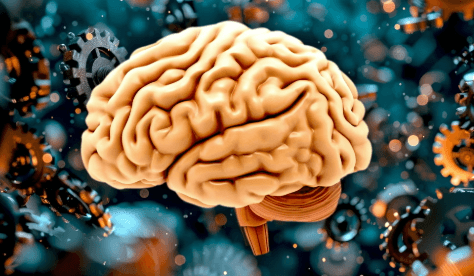
How Does an Introvert’s Brain Work?
The first concept is cortical arousal.
Biologically speaking, introverts have higher cortical arousal. Now you might ask, what it really means? Let me explain simply.
Thousands of years ago, when humans lived in jungles, there were two types of people in every tribe. One group went out hunting. They took risks. They were loud, action-oriented. The other group stayed back, protected the tribe, observed danger, detected threats, and thought deeply and strategically.
Imagine if everyone had gone hunting—who would protect the children and the tribe?
So evolution may have favoured different personality traits for different roles.
Extroverts who explored.
Introverts who were more cautious and observant.
Introverts were basically the bodyguards of the tribe. Their job was to observe every small movement, stay alert at every sound—because one small mistake could destroy the whole tribe. That’s why an introvert’s brain is naturally in high-alert mode. That’s cortical arousal.
The problem? The jungle is gone—but your brain still works the same way.
When you enter a party, your brain is processing everything:
Who is saying what?
How many people are here?
Why is that person coming toward me?
Why is it so loud?
How do I escape from here?
While an extrovert’s brain says, “New people, new friends, fun everywhere.”
An introvert’s brain says, “Too much noise here. Too many people. How should I interact with them? I need an exit strategy.”
And that’s why crowded or loud places feel uncomfortable.
But it’s not a weakness. Your brain is simply functioning as it naturally should.
Dopamine vs Acetylcholine
Here’s another factor—brain chemistry.
Think of extroverts and introverts as two cars running on different fuel.
Some of the latest research suggests that introverts and extroverts respond differently to their neurotransmitters. Extroverts’ dopamine reward system tends to be more responsive, which helps them make new social connections and feel energised and rewarded. Meanwhile, introverts’ dopamine reward system may be more sensitive to stimulation, which can lead to fatigue and discomfort in highly social environments.
In contrast, introverts seem to favour acetylcholine, a chemical linked to calm, reflective thought and sustained focus. Activities like quiet conversation, creative thinking, or solitary hobbies may activate this system and feel rewarding in a way that differs from the external stimulation extroverts seek.
An extrovert is like a petrol car. It needs social interaction to refuel. More people, more conversations, more energy. That’s because extroverts experience strong dopamine-driven rewards. New experiences give them a high.
Introverts are like electric cars. They need to plug in at home. Silence. Solitude. Peace.
If you take an electric car to a petrol pump, it won’t move.
Introverts may experience more reward from acetylcholine-related pathways, which are linked to calm, deep thinking, and focus.
So when an introvert goes to a party thinking, “Today I’ll have fun,” they often return exhausted—because their stimulation threshold may have been exceeded.
The Psychology Part
Now let’s talk psychology.
During my research on the topic “How to make friends as an introvert,” I studied many research articles and found an article by Dr Scott B. Dust, a management professor at the University of Cincinnati. He closely analyses the characteristics of introverts and extroverts. His research in personality psychology shows that introverts and extroverts have different information processing styles and handle social interaction differently. Introverts tend to process information deeply and reflectively, taking longer to formulate responses, while extroverts are more comfortable reacting in real time in social settings.
Imagine two computers.
An extrovert’s computer is basic—input comes, output comes instantly.
“How are you?”
“I’m great, you tell me!”
An introvert’s brain is like a high-end gaming PC.
“How are you?”
First, it analyses—Is this genuine? Is this formal? Should I give details? Will I bore them? When did we last meet? What’s the context?
By the time the introvert processes all this, the other person thinks, “Why is this guy so weird? Why is he slow?”
Your brain isn’t slow. It just thinks deeply. But the world expects quick responses.
And yes—introverts hate small talk. We prefer deep conversations about life, purpose, and emotions. But small talk is the bridge to deep conversations.
You can’t jump straight to the rooftop without using stairs.
Now Let’s Talk Solutions
You don’t have to change overnight. In fact, you don’t need to change at all. You just need to use your strengths smartly.

Hack No.1: Use Listening as a Superpower
Introverts are naturally great listeners. And people love talking about themselves.
Instead of thinking, “What should I say?”
Just ask:
“How did you do that?”
“What happened next?”
Just ask:
“How did you do that?”
“What happened next?”
Show curiosity. Let them speak. You’ll naturally flow into deeper conversations.
Hack No.2: Find Your Safe Space
Think of cricket. Teams perform better on home grounds because they’re familiar with the pitch and environment.
For introverts, socialising works the same way.
If you meet someone at a familiar coffee shop, gym, or park, your brain uses less energy processing the environment. You can focus 100% on conversation.
Same person. Different place. Completely different confidence.
Hack No.3: Manage Your Social Battery
Treat your social energy like your phone battery.
If you have a party at night, rest during the day.
Set a time limit: “I’ll stay for one hour.”
Set a time limit: “I’ll stay for one hour.”
Leave before you’re fully drained. That way, your brain associates social events with positive memories—not exhaustion.
Hack No.4: Find an Anchor Friend
An anchor friend is someone who can keep a conversation going when you go silent.
Studies show that shy people perform much better socially when paired with an outgoing friend.
That one extroverted friend in your circle? That’s your anchor. Use them.
Quick Confidence Boosters
- Use your observation skills.
- Set routines for meetups.
- Always start with a smile.
A simple smile makes you approachable and builds instant trust.
At the end of the day, this is just one introvert telling another introvert how to survive—and thrive—in this world.
What feels like your biggest disadvantage is actually your greatest strength.
You don’t need to become an extrovert.
You just need to become a smarter introvert.
You just need to become a smarter introvert.
Keep hustling. Keep learning. And as always—keep inspiring.