
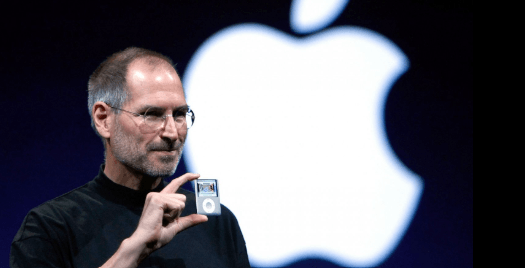
Steve Jobs, A visionary leader or an imitator?
When we look at the innovative products like iPhone, iPad, MacBook, etc., the only name that comes to our mind is Steve Jobs, but when we analyze deeply, we notice a pattern, a pattern of idea appropriation. The term Idea Appropriation means presenting someone else’s idea as your own to get recognition.
Well, some of you will call it an allegation, but to understand this, you need to dive into his history behind every innovation.
The Making of The iPhone: Innovation or Appropriation
Let’s discuss the making of the iPhone. Around the year 2000–2001, Steve suddenly came to the headquarters of Apple and asked them to work on a secret project. This project was named the Purple Project. He didn’t reveal anything about the project, like what the project was about or its duration. He asked for a yes or no for that project immediately. Some of them decided not to be part of that project, but some decided to be part of that secret project.
After that, the employees who agreed to work on this project were divided into two teams. For these two teams, he built two different private rooms, each with CCTV cameras almost around every corner. The first rule was that the employees could not talk about this project with anyone. They were not allowed to discuss it at home or with their partners, friends, or even with other employees.
Finally, on January 9, 2007, the project was completed. At San Francisco’s Moscone Center, Steve announced the secret project publicly for the very first time, and that project was the iPhone.
A question arises: what was new in the iPhone that was kept secret like that? Because there were many phones already in the market, like Samsung, Blackberry, Nokia, and many more. It was the iPhone’s touchscreen. But there were already touch-screen phones in the market, like IBM Simon, Palm Treo, and Microsoft Pocket PC.
The difference between all these phones and the iPhone was that these phones had a resistive touch screen, while the iPhone had a capacitive multi-touch screen. Because of this multi-touch, features like swiping and pinch-to-zoom became possible. It was way more user-friendly than those other resistive touch screens. Steve himself called it one of the biggest innovations.
But what if I say multi-touch was not Steve’s innovation? In 1965, the concept of the touch-screen interface was put into words by a British engineer, Eric Arthur Johnson. He was working for the Royal Radar Establishment at Malvern, England. He created a device that was used to control air traffic.
An engineering student named Nimish Mehta, Drawing inspiration from E.A. Johnson’s earlier work, engineering student Nimish Mehta developed the world’s first human-operated multi-touch device at the University of Toronto in 1982. In 1998, John Elias and Wayne Westerman from the University of Delaware started a company called FingerWorks and launched their first touchscreen keyboard.
In 2005, Steve Jobs acquired this company. He used that technology to create the iPhone and marked it as his own innovation. Later on, this feature became so well-liked that Samsung copied it and launched its Galaxy series. This made Steve furious, so in 2011, he directly filed a patent infringement case against Samsung. Samsung had to pay $539 million in fines.
The WOZNIAK Partnership: Genius in the Shadows
Long before Apple became a household name, Steve Jobs and Steve Wozniak shared a friendship that would quietly shape the entire tech industry. Let me explain their friendship with an example from their life.
This is the story of the year 1970, when Steve was working for a company named Atari. Here’s the whole story behind how Jobs got a job at Atari, because Steve had no knowledge of computers, software, or hardware.
Steve was living hand to mouth when he saw an ad for Atari in the newspaper. He went there for an interview but got rejected. He started crying there and said, “I am not leaving until I get a job.” The security guard was about to throw him out of the office when an engineer from the company came and called Steve inside.
Steve then convinced him by saying, “Even though I don’t have knowledge, trust me, I can do this.” So basically, he got the job on the basis of his “Trust me, I can do this.”
At the time, Nolan Bushnell, the founder of the company, gave Steve the task of building a Breakout game. Here comes Steve Wozniak, because Jobs didn’t have knowledge of technology. He went to Wozniak and told him that they had a deadline of four days and had to make a Breakout game.
Wozniak agreed to it. He spent four days and nights creating it. He created the game so brilliantly that he used only 44 chips to create it, while Atari was using 150 chips to create the same game.
Nolan became so happy that he gave Jobs a $5000 bonus. He went to Wozniak and told him that he got $700 for the game and would split the reward half and half. So from this, we can understand how amazing both Steves’ friendship was.
The Xerox Heist: Borrowing the Future of Computing
Many of Apple’s employees say that Steve had a bad habit, or maybe a business technique, that he used to steal people’s ideas and get credit. But again, it’s not just a statement; the internet is full of his biggest tech heists.
The story begins when Apple and Microsoft entered the printing industry, when Xerox Corporation already owned 80% market share. Both Apple and Microsoft affected the market indirectly, so Xerox created an R&D center in 1970 and called it PARC (Palo Alto Research Center).
PARC was working on high technologies like bitmap displays, computer software systems, the computer mouse, Ethernet networking, and graphical user interfaces in the 1970s. These technologies were so advanced at that time that a software developer at Apple named Jef Raskin realized that these could change the future of the computer industry. He immediately informed Steve Jobs about it.
Steve got excited, but he couldn’t show his interest in Xerox directly because they would have refused, so he contacted Xerox’s venture capital team and offered them that they could invest $1 million in Apple, and in return, they would have to show demos of their latest technologies they were developing at PARC.
So Steve visited Xerox and took the demos. He immediately understood that this could be the future of computers. He took the idea and improved it to create his computer named Lisa, which was a total failure, by the way.
Its failure had multiple reasons, like it was way too slow for the advanced machines used in it, it was extremely expensive, and the biggest reason was that Macintosh itself gave it competition.
At the time, Apple was working with Microsoft to create Macintosh, and Microsoft had access to Apple. While Bill Gates was working with Apple to create Macintosh, Bill launched Windows 1.0, which had an interface almost similar to Macintosh.
After Windows launched, Steve got so outraged that he filed a case against Bill Gates, but Gates came out clean according to the court because Apple and Microsoft were working together at the time when Steve was getting his ideas from Xerox.
FIRED FROM HIS OWN COMPANY:
In 1983, Steve approached Pepsi’s CEO, John Sculley. He convinced Sculley to join Apple as CEO. Two years later, Sculley fired Steve from his own company.
The reason behind this was that Jobs’ behavior with his employees was uncertain and overbearing. He was so obsessed with innovation that he was spending the company’s money on products, first Lisa, then Macintosh.
Then, suddenly, when Sculley was on a business trip, Steve tried to manipulate the board to get control. But somehow Sculley got the news, and he immediately came back and gave the board two options: him or Steve.
As discussed earlier about Steve’s behavior, it was obvious that the board voted against Steve Jobs, so he was thrown out of his own company.
After leaving Apple, he started a new company named NeXT in 1985. His main goal was to create a computer for researchers and universities.
In 1988, he launched his own computer, named NeXT Computer, also referred to as “The Cube.” Its cost was around $6500, which was too expensive at that time, even for universities, which couldn’t afford it. After some time, its hardware had to shut down.
But didn’t Steve know about the market prices of affordable computers? Why did he keep the price this high?
Let me say it was his business strategy. He had two reasons behind it:
1- He wanted exclusivity in products. He wanted to sell his products at a premium.
2- His plan was to take over his old company, Apple.
After Steve left Apple, analysts were thinking that Apple could go bankrupt because by the mid-1990s, Apple had lost $1 billion. Innovations had ended, sales had dropped, and their products started to fail.
Here, Steve used his persuasion skills. He sold his NeXT company to Apple by convincing them that the OS of NeXT was better than others. By that time, Apple also needed innovation to regain its old recognition, so it hired him back as an advisor.
The deal was closed for $429 million. He brought his team into key positions, replaced the old team with his own team, built influence for his people, won the trust of investors, and in 1997, he removed CEO Gil Amelio.
Now, at that time, Apple was in an impasse, so instead of launching new products, it acted smarter and associated with Microsoft. He somehow convinced Bill Gates to invest $150 million in Apple.
Both signed agreements like:
- Microsoft Office for Mac
- Internet Explorer as the default browser
- Legal disputes were withdrawn
This was not it. Then, at an Apple event, Bill Gates appeared on a live screen with Steve. This move bought him time, and then he started launching his new products like iPod, iPhone, and iMac. That is how he rebuilt Apple.
People argue about whether he was a visionary or just someone who stole other people’s ideas and polished them to create his own. Now, let me give you an example from his life.
In 1977, Steve visited Wozniak after the launch of the Apple II. Suddenly, Wozniak’s father came and said that his son deserved all the credit and that Steve had done nothing for the company.
Steve replied, “Then take away the company, I don’t want it.”
But Wozniak knew it wasn’t true. Apple was nothing without Steve Jobs. A PR expert, Regis McKenna, once said:
“Wozniak built a great computer. But without Jobs, it would have stayed in a corner.”
Now view another part of Steve’s life.
He bought a graphics team from Lucasfilm for $10 million and named it Pixar. He tried to sell hardware, but he failed. Then he shifted toward movies and decided to create animations.
In 1991, Pixar signed its first movie deal with Disney. The result was the blockbuster movie Toy Story in 1995. It earned $350 million.
But there was a problem. When Pixar and Disney worked together, they agreed on a deal that whatever revenue would be generated, Pixar would not get any of it and would only get its name attached.
But the movie was so successful that Disney made Toy Story 2 and Toy Story 3. Steve went to Disney again and renegotiated the agreement. This time, they agreed to make five movies, and the revenue generated by these movies would be split equally.
Disney agreed to it, and these movies also became blockbusters. The movies were Cars, Ratatouille, WALL-E, Up, and Toy Story 3.
After that, Disney and Pixar ended their partnership because this time Steve asked them for 100% revenue, which Disney obviously rejected.
In 2005, Disney’s CEO changed, and the new CEO, Bob Iger, noticed a pattern that when Pixar was working with Disney, the movies became huge hits. So he decided to renegotiate with Steve.
At the time, Apple was at its peak, so Steve agreed to sell Pixar to Disney in 2006 for $7.4 billion, but instead of taking cash, Steve became a 7% shareholder in Disney.
Conclusion
Steve was more of an editor than an inventor, but there is one thing that cannot be denied: he created a successful company without even having its basic technical knowledge.
Think for a moment, if Steve had not been there for Apple, would it have been possible for Apple to have this much credibility?
He didn’t invent most of the ideas, but he polished them in such an amazing way that Apple gained its image in the world.
Everyone can notice that after Steve’s death, Apple’s whole focus shifted from innovation to perfection and profit stability. Steve was the opposite of that. He didn’t follow logic; he always followed his instinct.