Will Technology Turn Humans into Gods? A Simple Look at Homo Deus
Technology is changing human lives rapidly. Artificial Intelligence, smart algorithms, and new machines are entering the market every day. 3 decades ago, there were very few smart machines and technology was limited, but now we are dependent on machines. These fast changes raise an important question: Is technology making us lazy or making humans more powerful? Or are humans losing control by depending on machines?
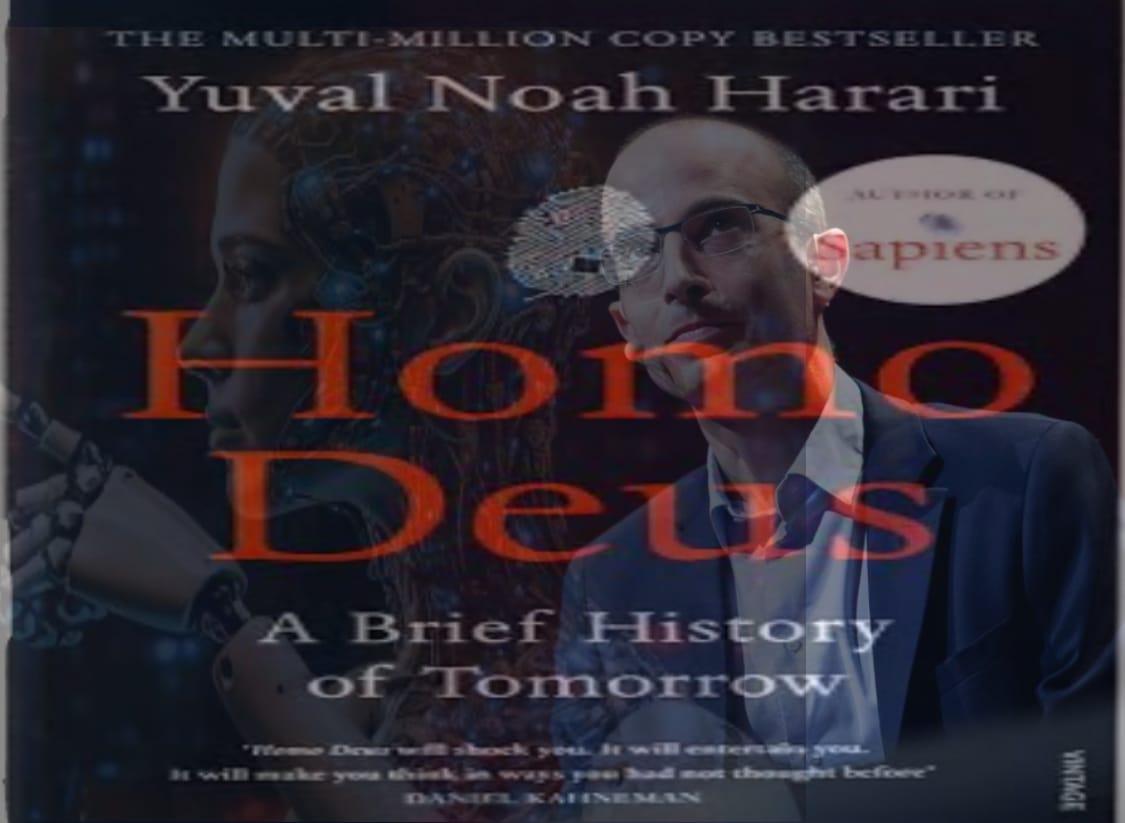
Historian Yuval Noah Harari emphasizes this idea in his masterpiece book Homo Deus. He asks critical questions about the human future: What will humans become if the technology grows stronger? Will people remain in control, or will they become totally dependent on technology? Will technology control their decisions, or what will be the destiny of humans?
In this article, you will get the answers to all the above questions with the help of the ideas of Yuval Noah Harari.
Why Humans Became Powerful
Throughout history, humans have always sought power. However, unlike animals, human power does not stem from strength or speed. For instance, a gorilla is stronger than a human; furthermore, a cheetah can reach speeds of more than 70 km/h. So what differentiates humans from animals?
The answer is thinking and imagination. Humans can envision things that do not actually exist but are real concepts, such as currency, countries, legal systems, and geographic borders.
These abstract concepts are real to us only because of a collective belief system held by millions.
Group imagination enabled humanity to develop organized communities, establish governments, and even create nations.
Religion, Science, and Human Importance
Humans have been told for thousands of years by religion that they were the center of the universe. All living things, including nature, animals, and stars, were here for the human race. This has made us feel like special, mighty beings.
Before science, when there was a natural disaster such as a flood, an earthquake, or a disease, it was believed to be a punishment from God. The way humans understood the world shifted with the rise of science. Scientists found out that earthquakes occur due to moving plates and that diseases are spread by germs.
As science explained the world around us, humans began to trust reason rather than religion. This has led to what is called humanism, which is the belief that humans are the most important form of life and that what makes us happy and what causes us to suffer is more important than anything else.
Humanity’s Greatest Struggles
For most of history, humans suffered from three major problems:
- Hunger
- Disease
- War
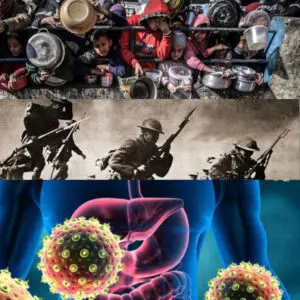
Millions died due to famine, disease caused entire cities to perish, and wars were everywhere. People thought these issues were beyond their control.
The modern use of science has changed that history. Advances in agricultural techniques have reduced hunger, while vaccines and other medical advances have helped control disease.
Similarly, global systems have greatly reduced the incidence of extensive warfare worldwide. Today, fewer people die due to wars than die from lifestyle-related diseases, such as obesity and diabetes.
This success created a new problem: if survival is no longer the goal, what comes next?
The New Human Dream
According to Homo Deus, modern humans want more than survival. They want:
- Longer life
- Better health
- Greater happiness
- Control over aging and death
Some may think it impossible, but science has doubled our average lifespan in the past century. The development of genetic testing has enabled us to identify disease risk factors before a baby is born. Artificial organs and robotic limbs allow people to achieve mobility that was never possible before.
As brain chips are developed, scientists are working on ways to connect our brains directly to computers, which Harari suggests will result in our species evolving from Homo sapiens to a “god-like” species, termed Homo Deus.
The Dark Side of Progress
There is a cost associated with the development of humanity. For every stride humanity has taken, animals have paid dearly for their diminished quality of life at the hands of factory farms, which often keep them in terrible conditions and deny them access to adequate light and space.
Humans justify their inhumane treatment of animals based on the premise that we possess “souls.” However, Mr. Harari disputes this premise through his challenge to the scientific basis for the existence of a “soul.” In addition, Mr. Harari points out that modern science has not yet fully comprehended the phenomenon of “consciousness.”
There is also an uncomfortable question posed: “Why is it that human suffering should always be considered to supersede that of any other living creature?”
Moral decisions begin where science ends.
Science is a very powerful but neutral source of information that has shown us many things about “how things work,” but it is not capable of providing a moral directive on whether we should do something.
There are many belief systems in society, such as religious, nationalist, socialist, and liberal, that provide moral guidance to help people decide what they should or should not do.
The most serious challenge for human beings will be our economic systems, which require perpetual growth to remain viable. As we continue towards infinity without any final destination, we are not sure what or where it will ultimately lead.
Do Humans Really Have Free Will?
According to humanistic philosophy (Humanism), human beings are free to choose how they behave. Harari has questioned this assertion. As neuroscience shows, our decisions are influenced by our previous experiences, our environment, and our brain chemistry, meaning we will often make a decision first and provide an explanation for it later.
At the same time that human beings are becoming increasingly trusting of algorithms rather than themselves, algorithm-based systems outperform them in finance, medicine, and data analysis.
Algorithms created by social networks understand our likes, dislikes, and even how we think.
We are slowly becoming producers of data rather than the people responsible for making decisions.

Two Possible Futures
Harari presents two possible futures:
- Humans merge with technology.
Humans enhance themselves with brain chips and biological upgrades. But these technologies may only be available to the rich, creating a deeply unequal world. - Data becomes more important than humans.
In this future, humans lose their value, and only data matters. Algorithms may start creating better algorithms, leaving humans with no meaningful role.
A Question for the Future
Homo Deus does not provide a definitive solution; it provides insight for thought. Humans in the past have sought guidance from gods through religion, nationalism, and ideology. Will we find the same to be true when we look to the new deity of the future, the algorithm?
The greatest threat isn’t that machines will surpass human intelligence, but that humans may lose the ability to reason independently.
So here is the final question:
If technology offered you a chip for your brain, would you accept it?
Is Homo Deus worth Reading Today?
The answer is yes: it is still relevant and worth reading today, as we are seeing the predictions by Yuval Noah Harari come true, and we should work on the recommendations the author suggests.
Who is Yuval Noah Harari
Yuval Noah Harari was an Israeli historian, public intellectual, and a Science writer. He wrote many masterpieces, such as Sapiens: A Brief History of Humankind, Homo Deus: A Brief History of Tomorrow, and Nexus.
He is one of the top-selling authors. His books were translated into 65 languages and sold over 46 million copies.