
What is EasyPaisa: The Story of Pakistan’s Biggest Revolution
In Pakistan, EasyPaisa is currently the most popular application for electronic money transfers and digital payments. Each month, millions of transactions are made through EasyPaisa, connecting millions of people from various backgrounds and linking them to formal financial services.
However, many customers do not understand how EasyPaisa achieved such success after experiencing years of struggle, facing enormous oppositional forces, and enduring extreme security issues.
EasyPaisa was not created as a large financial institution. Rather, EasyPaisa began as a small product of Tameer Microfinance Bank, evolving from a start-up idea into one that has reshaped Pakistan’s payment landscape through the advantages gained from its vision and unique ability to innovate, adapt, persist, and overcome obstacles.
Before EasyPaisa: A Cash-Based Economy
- Visit a bank branch to deposit cash, or
- Use complicated online banking systems involving account numbers, SWIFT codes, and multiple verification steps.
As a result, cash dominated daily transactions. A large portion of the population did not even have a bank account. For many Pakistanis, banking felt distant, complex, and inaccessible.
Nadeem Hussain: The Mind Behind the EasyPaisa Revolution
Using his deep experience in banking, Nadeem closely studied Pakistan’s financial system. What he found was clear:
- Banking infrastructure was outdated
- Online banking was rare
- Most low-income individuals were excluded from formal finance.

Growth of Tameer Bank and Telenor’s Entry
Building a digital bank was not an easy task. The first major challenge was finding a group of qualified people to build a great team. Nadeem recruited some of Citibank‘s top bankers to come to Pakistan and establish a management system that would enable the bank to operate efficiently.
Tameer Bank experienced rapid growth and soon became interested in large international companies. In 2008, Telenor, a multinational telecommunication corporation, acquired 51% ownership in Tameer Microfinance Bank. Even after this acquisition, Nadeem Hussain continued as the Chief Executive Officer (CEO) and main decision-maker.
The Big Idea: Every Mobile Number Can Be a Bank Account
Bank-to-bank transfer options were available, but everyday financial transactions (such as Utility payments, employee salaries, and urgent fund remittance) still required in–person visits to the bank. This resulted in significant time loss for customers waiting in line.
One factor that was already in wide use in Pakistan was mobile phones. In 2009, when the Government of Pakistan launched its biometric SIM verification program, that is when Nadeem Hussain had his creative moment.
If every SIM is biometrically verified, why can’t every mobile number function as a bank account?
There was no existing system for this, and people were still afraid of online banking. But instead of opening bank branches everywhere, the team made a bold decision:
Turn every mobile shop into a bank.
From Mobile Shops to Financial Branches
From Mobile Shops to Money Branches
Tameer Bank offered basic payment services through Telenor franchises and mobile top-up agents. Suddenly:
- Mobile shops allowed money transfers
- Local payment of utility bills.
- Payment, without a bank account, was possible to receive.
Simple mobile recharge shops were transformed into tiny financial service points. After experiencing positive early results, Telenor and Tameer Bank formally introduced EasyPaisa in 2009.
EasyPaisa began as the country’s first mobile wallet and branchless banking platform. For the first time, people saw that banking does not have to be in a building.
Labourers, rickshaw drivers, shopkeepers – people unlikely ever to have owned a bank account could now safely send and receive money.
The Agent Network: EasyPaisa’s First Superpower
While Pakistan had fewer than 10,000 bank branches, EasyPaisa built an agent network that grew into the hundreds of thousands.
EasyPaisa agents appeared:
- In streets and neighborhoods
- At bus stops and markets
- In villages where no bank had ever existed
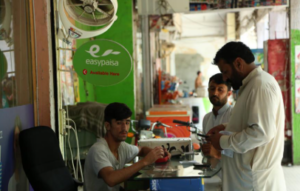
This massive reach became EasyPaisa’s first true competitive advantage.
Personal Accounts and the USSD Revolution
To enhance access to services offered through EasyPaisa, EasyPaisa utilized the use of USSD and SMS technology to offer individuals personal mobile accounts.
Dialing *786# on a Telenor SIM allowed users to create a wallet without requiring internet access or a smartphone. This marked a significant change in the landscape of Pakistan‘s financial services and enabled access for millions of people to be part of the digital economy.
Security Challenges and Fraud Issues. Is EasyPaisa Safe?
With rapid growth came serious problems. In its early years, EasyPaisa faced:
- Fake agents
- Duplicate SIMs
- Misuse of CNIC information
- PIN-sharing scams
Users often shared their PINs without realizing what they were doing because many had no knowledge about digital security, which is taken advantage of by criminals.
To overcome this challenge, EasyPaisa launched campaigns across the country to educate users on how to keep their PIN safe and how to verify the identity of an agent. As users became more informed, trust levels rose, and the number of instances of fraud was reduced significantly over time.
Smartphones, Apps, and the Next Leap
The arrival of affordable smartphones changed everything.
EasyPaisa launched its mobile app, allowing users to:
- Transfer money directly
- Pay bills
- Recharge mobile balance
- QR payments
- Shop online
- Access debit cards and insurance
Customers did not have to rely on agents anymore. They could perform all E–banking services by using one screen. In two years, EasyPaisa made 100+ million transactions, making it the first app to process that number of transactions.
For 2020, 50+ million people in Pakistan were registered to use EasyPaisa; therefore, 25% of Pakistanis were using it.
EasyPaisa’s Competition with JazzCash and Government Adoption
Due to the success of EasyPaisa, the entrance of JazzCash into the same market created even more competition for EasyPaisa, which resulted in better services and increased innovation for customers.
At the same time, the government was starting to use digital payments for things like utility payments, scholarships, and social security benefits through mobile wallets. This also led to an increase in financial inclusiveness.
COVID-19: Turning Point for Digital Banking App
How Does EasyPaisa Make Money? The Business Model Of the App
EasyPaisa operates on a commission-based model. It earns revenue from:
- Small fees on bill payments
- Commissions from online shopping
- Service charges on transactions
- Percentage-based earnings from government payments and 1LINK transfers
These small amounts, multiplied by millions of transactions, form a powerful and sustainable business model.
EasyPaisa Pakistan: The Revolution in Digital Banking in Pakistan
EasyPaisa‘s vision was uncomplicated, yet innovative: Rather than bringing people to the bank, bring the bank to the people. Through the integration of mobile technology and traditional banking practices, EasyPaisa demonstrated how mobile phones could serve as banks by using advanced technology.
Trust is an essential component of banking. For many Pakistanis, the beginning of this trust came from using EasyPaisa. And now today in 2026, the trust of the users in the Easypaisa security has increased, and the users are loving it.